Download 2. Ecological Pyramids-S0001.pdf and more Exercises Nutrition in PDF only on Docsity!
Ecological Pyramids 1
Ecological Pyramids
How does energy flow through an ecosystem?
Why?
Every organism in an ecosystem is either eating or being eaten. When cows eat grass, they obtain some of the energy that the grass transferred from the sunlight it absorbed. If cows could carry out photosynthe- sis, would they have access to more energy than they get as herbivores? Which organisms in an ecosystem require the most energy to sustain life?
Model 1 – Pyramid of Energy
24 kcal (^) Hawk (carnivore)
Values in the pyramid are per square meter per year.
Blue jays (omnivore)
Caterpillars (herbivore)
Oak tree leaves (producer)
Sunlight hitting Earth’s surface = 3,190,000 kcal
470 kcal
4,000 kcal
25,500 kcal
- A unit used to measure energy is the kcal. a. What is the source of all energy in the pyramid in Model 1?
b. How much energy does this source provide to a square meter of the Earth per year? (Be sure your answer includes units.)
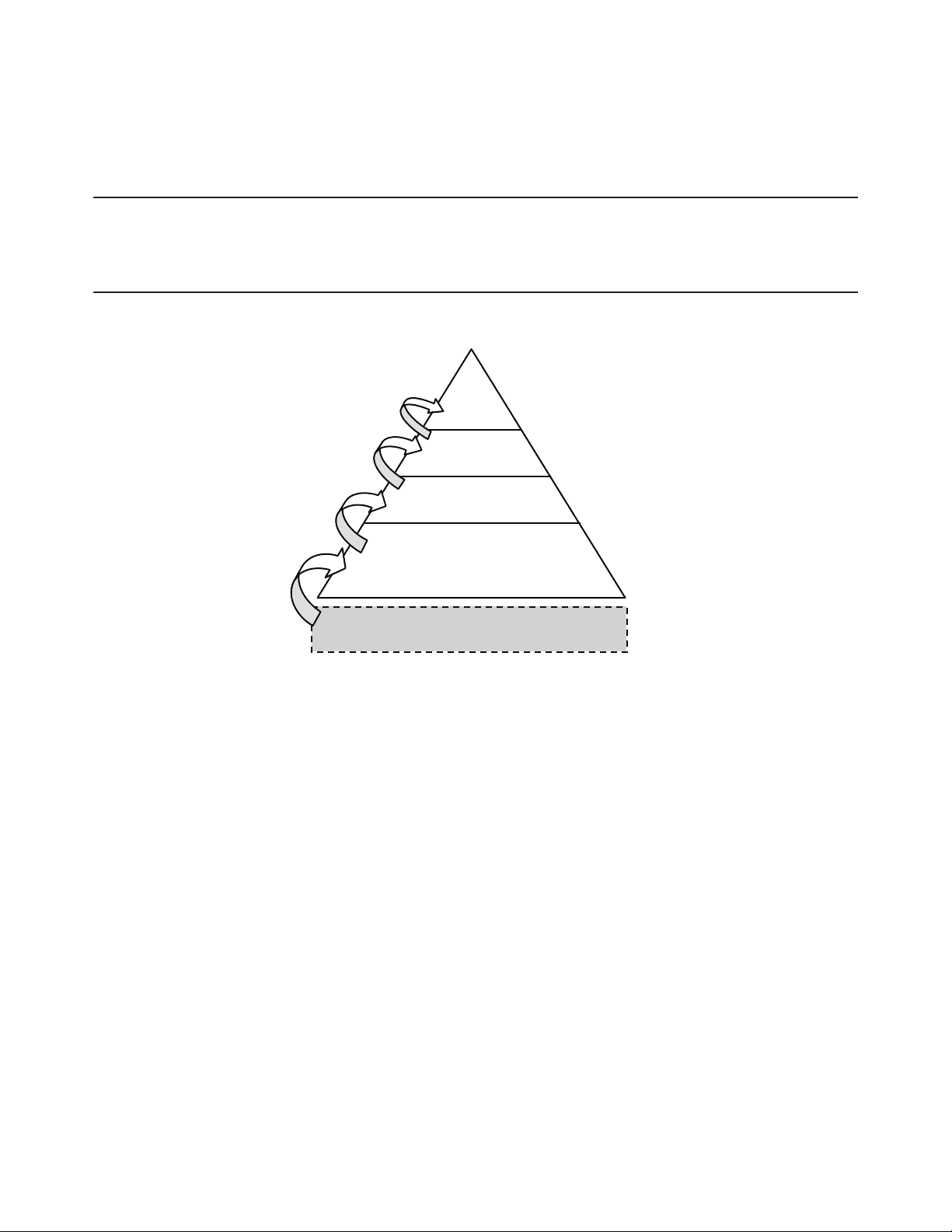
- Label the pyramid levels in Model 1 with the following: primary producers, primary consumers, secondary consumers, and tertiary consumers.
- The arrows in Model 1 represent the energy available to the next level of the pyramid. a. What percentage of the source energy from Question 1 a is absorbed by the oak leaves in Model 1?
b. By what process do the oak leaves harness this energy?
Name: __________________________________ Period: ____
2 POGIL™^ Activities for High School Biology
- Describe how the consumers in one level of the pyramid obtain energy from the organisms at the previous level of the pyramid.
- Refer to Model 1. a. How much energy per year do the caterpillars in Model 1 obtain from eating the leaves in a square meter of the oak tree?
b. What percentage of the energy that was originally absorbed by the oak leaves is passed on to the caterpillars?
c. What percentage of the energy absorbed by the oak leaves is not passed on to the caterpillars?
d. With your group, list at least three possible uses and/or products of the energy absorbed by the oak leaves that did not contribute to the production of biomass.
- Calculate the percentage of energy that is transferred from one level of the pyramid in Model 1 to another for all of the levels. a. Oak leaves to caterpillars (see Question 5 b ).
b. Caterpillars to blue jays.
c. Blue jays to hawk.
- Calculate the average percentage of energy that is transferred from one level to another using your answers in Question 6. Note that this average percentage transfer is similar for many differ- ent types of energy pyramids in nature.
- As a group, write a statement that describes the pattern of energy transfer among consumers within a pyramid of energy.
4 POGIL™^ Activities for High School Biology
Model 2 – Pyramid of Numbers
Pyramid A Pyramid B
1 hawk
20 blue jays
1000 caterpillars
2 oak trees
1 hawk
20 blue jays
1000 caterpillars
100,000 oak leaves
- Compare and contrast the two pyramids in Model 2. List at least two similarities and two differences.
- How does the number of organisms change as you move up the levels in Pyramid A compared to Pyramid B?
- Are the “producers” levels in the two pyramids in Model 2 referring to the same organisms or different organisms? Explain.
- Which of the two pyramids in Model 2 gives a more accurate account of what occurs in this ecosystem? Use complete sentences to explain your reasoning.
Ecological Pyramids 5
Model 3 – Pyramid of Biomass
Pyramid X Pyramid Y
Hawk (80 g/m 2 )
Blue jays (400 g/m^2 )
Heron (20 g/m 2 )
Perch (100 g/m 2 )
Zooplankton (210 g/m^2 )
Oak trees (11,000 g/m 2 ) Phytoplankton (40 g/m^2 )
Caterpillars (800 g/m^2 )
- Biomass is measured as grams of dry mass within an area. What is the mass of the oak trees in Pyramid X of Model 3?
- What is the mass of the phytoplankton in Pyramid Y of Model 3?
- Refer to Model 3. a. Identify the trend in biomass as you move up the trophic levels in Pyramid X.
b. Is the trend in biomass in Pyramid X the same as seen in Pyramid Y? Explain your answer.
Read This!
Phytoplankton are microscopic aquatic organisms that are quickly consumed by microscopic animals (zooplankton). Because they are eaten so quickly there is a need for the phytoplankton to reproduce rapidly for survival.
- Explain why the Pyramid Y ecosystem can exist with a smaller biomass at the producer level.
- Use examples from the previous models to explain the advantage of using a pyramid of energy or biomass rather than a pyramid of numbers to explain the relationship between different trophic levels.