2023 California DMV Permit Test EXAM, Exams of European Computer Driving Licence (ECDL)

A practice exam for the 2023 california dmv permit test. It includes multiple-choice questions covering various aspects of california driving laws and safe driving practices. The exam covers topics such as traffic signals, parking regulations, right-of-way rules, and safe driving techniques. It is designed to help individuals prepare for the official dmv permit test by providing a comprehensive review of the material and testing their knowledge of california driving laws. Useful for high school students and lifelong learners.

Typology: Exams

2024/2025

Available from 09/17/2025

PROF-DURK
PROF-DURK 🇰🇪

2.5K documents

1 / 17

Toggle sidebar

This page cannot be seen from the preview

Don't miss anything!

bg1
1 / 17
2023 California DMV Permit Test EXAM
ights
ghts
flashing.
sly
during
___.:
25
nces
:
Large trucks
2. You may drive off of the paved roadway to pass another vehicle:: Under no
circumstances.
3. When you are merging onto the freeway, you should be driving:: At or near
the same speed as the traffic on the freeway.
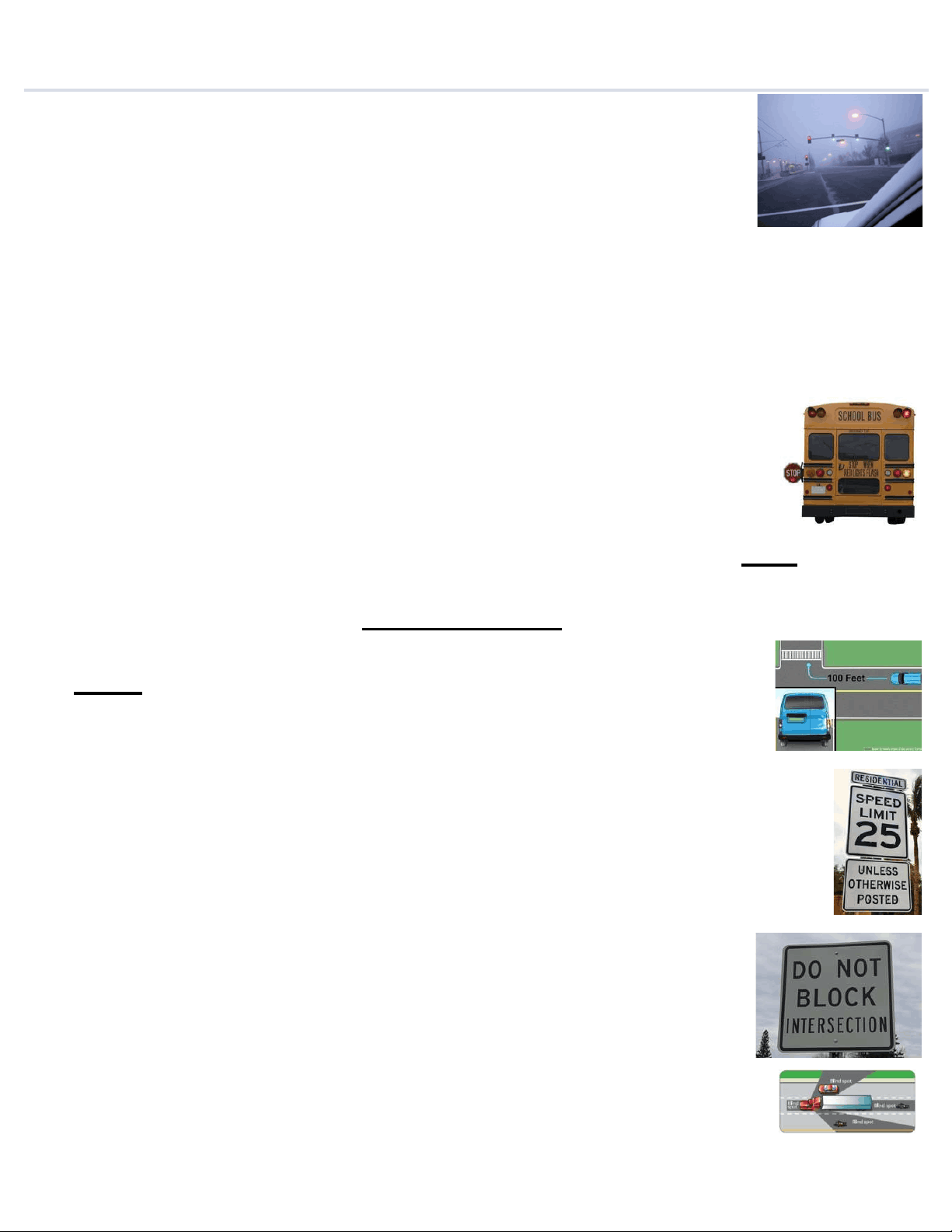
4. When driving in fog, you should use your:: Low beams
5. A school bus ahead of you in your lane is stopped with red li
You should:: Stop as long as the red lights are flashing
6. You just sold your vehicle. You must notify the DMV within days.: 5
7. To avoid last minute moves, you should be looking down the road to where
your vehicle will be in about .: 10 to 15 seconds
8. You are about to make a left turn. You must signal continuou
last feet before the turn.: 100
9. Unless otherwise posted the speed limit in a residential area is _
mph
10. You may legally block an intersection:: Under no circumsta
11. Which of the following statements about blind spots is true?
have bigger blind spots than most passenger vehicles.
1. When driving in fog, it is best to drive with: Low beam headl
pf3
pf4
pf5
pf8
pf9
pfa
pfd
pfe
pff

Partial preview of the text

Download 2023 California DMV Permit Test EXAM and more Exams European Computer Driving Licence (ECDL) in PDF only on Docsity!

ights ghts flashing. sly during the ___.: 25 nces : Large trucks

  1. You may drive off of the paved roadway to pass another vehicle:: Under no circumstances.
  2. When you are merging onto the freeway, you should be driving:: At or near the same speed as the traffic on the freeway.
  3. When driving in fog, you should use your:: Low beams
  4. A school bus ahead of you in your lane is stopped with red li You should:: Stop as long as the red lights are flashing
  5. You just sold your vehicle. You must notify the DMV within days.: 5
  6. To avoid last minute moves, you should be looking down the road to where your vehicle will be in about .: 10 to 15 seconds
  7. You are about to make a left turn. You must signal continuou last feet before the turn.: 100
  8. Unless otherwise posted the speed limit in a residential area is _ mph
  9. You may legally block an intersection:: Under no circumsta
  10. Which of the following statements about blind spots is true? have bigger blind spots than most passenger vehicles.
    1. When driving in fog, it is best to drive with: Low beam headl

r your vehicle et apart:: May You should s traveling at f cellular oth hands on

  1. With a Class C drivers license a person may drive: A 3-axle vehicle if the Gross Vehicle Weight is less than 6,000 pounds
  2. If you are involved in a traffic collision, you are required to complete and submit a written report (SR1) to the DMV:: If there is property damage in excess of $1,000 or if there are any injuries.
  3. You may not park your vehicle:: Next to a red painted curb
  4. You must notify the DMV within 5 days if you:: Sell or transfe
  5. Two sets of solid, double, yellow lines that are two or more fe not be crossed for any reason.
  6. You want to make a right turn at an upcoming intersection. slow down and:: Signal for 100 feet before turning.
  7. You are driving on a freeway posted for 65 MPH. The traffic i 70 MPH. You may legally drive:: No faster than 65 mph.
  8. It is illegal to park your vehicle:: In an unmarked crosswalk
  9. The safest precaution that you can take regarding the use o phones and driving is:: Use hands-free devices so you can keep b the steering wheel.

art reducing h a blood hundredths of at is using its f the road as

  1. When parking your vehicle parallel to the curb on a level street:: Your wheels must be within 18 inches of the curb.
  2. You are preparing to exit the interstate. When should you st your speed?: Immediately upon entering the deceleration lane
  3. Blue traffic signs offer information on:: Motorist services
  4. It is illegal for a person 21 years of age or older to drive wit alcohol concentration (BAC) that is or higher: 0.08%-- Eight- one percent
  5. Having a driver license is a :: Privilege, not a right
  6. When changing lanes, you can check your blind spots by:: Using the inside rearview mirror. Turning your head and looking over your shoulder.
  7. You must yield the right-of-way to an emergency vehicle th siren and flashing lights by:: Driving as closely to the right edge o possible and stopping.
  8. You have been involved in a minor traffic collision with a parked vehicle and you can't find the owner. You must:: Leave a note on the vehicle or Report the collision without delay to the city police or, in unincorporated areas, to the California highway patrol.
  9. If weather or light conditions require you to have your lights on while driving:: Use your low beams
  10. If it starts to rain on a hot day, the road is slippery:: For the first few minutes
  11. You are entering a roundabout with multiple lanes, and you need to turn left at the intersection. You must:: Choose the left-land lane and exit

hould use as a onds of space ne vehicle is Who has the y octagonal olor. tions and top signs.

  1. To avoid tailgating, drivers should:: Use the "three-second rule"
  2. Three second rule: is a way to measure the distance that you s cushion when following another vehicle. It requires leaving three sec between your vehicle and the vehicle driving in front of you.
  3. When you prepare to make a left turn from a one-way road into a one-way road, you must:: Approach the turn in the left lane of from the left side of a single lane
  4. Two vehicles approach an uncontrolled "T" intersection. O on the through road and and the other is on the road that ends. right-of-way at the intersection?: The vehicle on the through road
  5. STOP SIGN: A red-and-white regulatory traffic sign. This is the onl (8-sided) traffic sign, you can easily recognize it by both shape and c
  6. At an intersection controlled by a "STOP" sign: you must come to a com- plete stop and check for pedestrians and cross traffic. Yield to other traffic going through the intersection and any pedestrians crossing the street.
  7. Four Way Stop: This road sign is placed at four-way stop intersec informs drivers that all entrances to this intersection are controlled by s
  8. At a four way stop, the first vehicle to arrive at the intersection?: should be the first to leave
  9. At a four way stop, when two vehicles reach the intersection at the same time?: the driver of the vehicle on left must yield to the driver of the vehicle on the right
  10. At a four way stop, if two vehicles are facing each other and are traveling straight through the intersection?: both vehicles can go at the same time.
  11. Unless otherwise posted the speed limit in a residential area is :: 25 MPH

sually installed front wheels w down or pedestrian estrians may ent they enter ng to stop to gns at the st yield the u:: Cannot

  1. When parking uphill on a two-way street with no curb, your should be turned to the: Turned to the right (away from the street)
  2. On rainy, snowy, or foggy days, you should turn on your windshield wipers and: Use your headlights so other drivers can see you
  3. Pedestrian Crossing: Watch for people crossing the street. Slo stop if necessary. Remember that people crossing the street on the crossing have the right of way. Slowing down is important since ped be obscured by parked vehicles and you may not see them the mom the roadway.
  4. When a school bus flashes yellow lights:: The bus is prepari let the children off the bust
  5. At intersections where two or more drivers stop at STOP si same time and they are at right angles: the driver on the left mu right-of-way to the driver on the right.
  6. Generally speaking, you are in a large truck's blind spot if yo see the truck driver in the truck's side mirrors
  7. Two sets of solid double yellow lines spaced 2 feet or more apart:: May not be crossed for any reason, they are considered a barrier. Do not drive on or over this barrier, make a left turn, or make a U-turn across it, except at designated openings.
  8. Your blood alcohol content (BAC) depends on what:: how much alcohol you drink, how much time passes between drinks, and your weight. moving in the opposite direction. A DO NOT ENTER traffic sign is u together with the "WRONG WAY" sign.

w down to a tern space to the side ered:: A "blind an intersect- pell because way exit ramp

  1. YIELD right of way sign: Triangle signs mean yield. You must slo speed that is reasonable for existing conditions and stop if necessary.
  2. Parking is never permitted:: In a crosshatched (diagonal) pat
  3. You are reaching an intersection, and trees block your view for the last 100 feet before crossing. The intersection is consid intersection"
  4. blind intersection: an intersection in which your view of traffic on ing road is impeded
  5. Roads are the most slippery:: during the first rain after a dry s oil and dust on the road have not previously been washed away.
  6. WRONG WAY sign: You are going the wrong way on an express or highway. Do not drive past this sign. Turn around immediately.
  7. You may turn left onto a one-way street that moves to the left if: there is no sign prohibiting the turn.
  8. You may not turn left onto a one-way street where traffic: moves to the right.
  9. When driving at night on a dimly lit street, you should:: Drive slowly enough so you can stop within the area lighted by your headlights
  10. To make a right turn onto a two-way street from a two-way street, start in the right-hand lane and end in:: The lane closest to the curb
  11. What is the first thing to do when you make a three-point turn?: Signal with your right turn signal, then pull over to the right and stop.

our speed your speed, Slow your railroad hen:: You can or

  1. Which of the following is true about the Anti-Lock Brake System?: It allows drivers to steer during an emergency braking situation And It prevents skidding
  2. Left Curve sign: The roadway ahead curves to the left. Slow your keep well to the right.
  3. Right Curve sign: The roadway ahead curves to the right. Slow y and keep well to the left.
  4. Sharp Left Turn: The road will make a sharp turn to the left. Slow keep to the left and do not pass other vehicles.
  5. Sharp Right Turn: The road will make a sharp turn to the right. speed, keep to the right, and do not pass other vehicles.
  6. Which of these vehicles must always stop before crossing tracks?: Tanks trucks marked with hazardous materials placards
  7. after passing a car, it is safe to return to your driving lane w see both headlights of the car you just passed in your rearview mirr
  8. You must come to a full stop at a yield sign: If traffic conditions require it.
  9. If you are convicted of driving under the influence, you may be sentenced to:: Serve up to six months in jail
  10. If the roadway is wet and your vehicles starts to skid, you should:: Slowly ease your foot off the gas pedal speed and

lti-lane high- direction you to merge into

. Do not brake ur car and the three (3) mpanied by u enter the

  1. A peace officer is signaling you to drive to the edge of the roadway. You decide to ignore the officer's warning and flee the scene. You are guilty of a misdemeanor and can be punished by being:: Jailed in the country jail for not more than one year
  2. When being followed by a tailgater, which of the following will help you avoid being hit from behind?: When being closely followed by a tailgater, you should slow down gradually or merge into another lane to prevent a collision with them.
  3. You are driving on the right edge of the lane of a four-lane highway and you see thick white lines on the left side of your lane. You are driving on an: exit lane
  4. Freeway lanes that are ending will usually be marked by: large broken lines painted on the pavement. If you are driving in a lane marked with these broken lines, be prepared to exit the freeway or for the lane to end.
  5. You must give the right of way to any pedestrian who is:: Crossing any street
  6. California's "Basic Speed Law" states that:: You should not drive faster than is safe given the weather and vehicle conditions
  7. Lane Ends Ahead: Lane ends ahead. This sign is used on mu ways to warn you of a reduction in the number of traffic lanes in the are traveling. Be prepared to change lanes or to allow other vehicles your lane.
  8. Slippery When Wet: When pavement is wet, reduce your speed hard or change direction suddenly. Increase the distance between yo one ahead of you.
  9. Winding Road: (SET OF CURVES). This sign indicates there are or more curves in a row on the road ahead. The sign is frequently acco an advisory speed sign. Slow down to recommended speed before yo curves.

are blue, e available

  1. Guide signs: These signs are square or rectangular shaped and green, or brown with white lettering. They tell drivers what services ar in the area.
  2. Increase your following distance when driving behind a large vehicle:: - To better see around the sides of the vehicle.
  3. Smoking inside a vehicle with a person younger than 18 years of age is:: illegal at all times In California, it is illegal to smoke in a vehicle at any time when a minor is present.
  4. If you miss your exit on the freeway, you should not:: Back up on the road or shoulder.
  5. You are approaching an intersection where a traffic signal is displaying a steady yellow light. If you have not already entered the intersection, you should:: Come to a safe spot
  6. At a red traffic light with a green arrow, you may proceed in the direction of the arrow if:: You are in the proper lane and the roadway is clear.
  7. To turn left from a multilane one-way street onto a one-way street, you should start your turn from:: The lane closest to the left curb
  8. When passing another vehicle, it is safe to return to your lane if you:: See the vehicle's headlights in your rearview mirror.
  9. You should not use your horn:: Near blind pedestrians. When driving near a blind pedestrian, using your horn may be dangerous. Yield to the pedestrian and proceed when it is safe to do so.
  10. You should always travel:: At a speed appropriate for road and weather conditions.
  11. U-turns in business districts are:: Legal at intersections, unless a sign prohibits them
  12. When driving at night, you should:: Increase your following distance
  13. When entering traffic after being parked at a curb you:: Should wait for a large enough gap to get up to the speed of the traffic
  14. A U-turn is not permitted:: On or near any curve or hill.

icycle, or the green

  1. All of the following practices are dangerous to do while driving. Which of these is also illegal?: Listening to music through headphones that cover both ears.
  2. Always stop before you cross railroad tracks when:: You don't have room on the other side to completely cross the tracks.
  3. When you tailgate other drivers (drive close to their rear bumper):: You can frustrate the other drivers and make them angry.
  4. Should you always drive slower than other traffic?: No, you can block traffic when you drive too slowly.
  5. A intersections, crosswalks, and railroad crossings, you should always:- : Look to the sides of your vehicle to see what is coming
  6. You are driving on the freeway. The vehicle in front of you is a large truck.You should drive:: Farther behind the truck than you would for a passenger vehicle.
  7. You see a signal person at a road construction site ahead. You should obey his or her instructions:: At all times.
  8. When can you drive in a bike lane?: When you are within 200 feet of a cross street where you plan to turn right.
  9. You see a flashing yellow traffic signal at an upcoming intersection. The flashing yellow light means:: Slow down and cross the intersection carefully.
  10. There is no crosswalk and you see a pedestrian crossing your lane ahead. You should:: Stop and let him/her finish crossing the street.
  11. A solid yellow line next to a broken yellow line means that vehicles:: Next to the broken line may pass.
  12. On a green arrow, you must:: Go but, Yield to any vehicle, b pedestrian in the intersection
  13. Red arrow: A red arrow means "STOP." Remain stopped until signal or green arrow appears. Do not turn against a red arrow.
  14. Red signal light: STOP. A right turn can be made on a red light only after you stop and yield to pedestrians and vehicles in your path. Do not turn in there is a
  1. Another car creates a hazardous situation by suddenly cutting in front of you. Which of these actions should you take first?: Take your foot off the gas
  2. The "Three-second rule" applies to the space of your vehicle:: - Ahead
  3. Large trucks turning right onto a street with two lanes in each direction:- : Often have to use a portion of left lane to complete the turn
  4. Large trucks are most likely to lose speed and cause a hazard:: Going up long steep hills
  5. Which of these statement is true about children riding in your vehicle?- : Children under the age of 1 should not ride in the front seat in vehicles equipped with airbags
  6. When driving a car equipped with airbags, you are safest when you:: - Maintain a space of at least 10 inches between you and the steering wheel
  7. How dies a solid red traffic light differ from a red arrow traffic light: You are not allowed to turn on a red arrow after stopping
  8. You are planning to make a left turn from dedicated left-turn lane when the light turns to a yellow arrow. You should:: Be prepared to obey the next signal that appears
  9. You are approaching an intersection where the traffic signal is flashing red. You should:: Stop before entering the intersection and proceed when it is safe to do so
  10. If you arrive at an intersection when the traffic light is not functioning, you should:: Come to a complete stop and proceed when it is safe to do so
  11. What should you do if you see this sign? YIELD: Prepare to stop if neces- sary
  12. Which of the following is true when you are moving in a dedicated turn lane controlled by a green arrow light: All oncoming vehicles and pedestrians are stopped by red lights
  13. When looking ahead of your vehicle while driving, you should:: Scan your surroundings
  14. You are driving on a roadway where vehicles are approaching from the opposite direction on your left and vehicles are parked in a row on your right. You should steer:: A middle course between the oncoming traffic and the parked cars
  1. Flash your brake lights or turn on your emergency flashers if you:: Need to warn other drivers of an accident ahead
  2. If you want to pass a bicyclist riding on the right edge of your lane, you:: Must sound your horn before passing the bicyclist
  3. During the first 12 months as a newly license driver, you must be accompanied by your parent guardian if you:: Transport minors between the hours of 11:00 PM and 5:00 A.M
  4. To turn left from one-way street onto a one-way street, start from:: The lane closest to the left curb
  5. If you are being followed too closely on a two-lane road:: Reduce your speed slowly to encourage the tailgater to drive around you
  6. Which lane must you be in before making a left turn from a one-way street?: The lane nearest the left curb
  7. Excessive Speed:: Often leads to high-risk decision-making
  8. If you are driving on a highway next to a single broken white line marking: You may cross the line to pass and change lanes
  9. If you want to pass a bicyclists riding on the edge of your lane:: You must not squeeze pass the bicyclist
  10. In which of the following scenarios should your wheel not be pointed straight ahead?: When parked on a hill or sloping driveway
  11. California's "Basic Speed Law" says you must:: Never drive faster than is safe for current conditions