


Docsity.com


Study with the several resources on Docsity

Earn points by helping other students or get them with a premium plan

Prepare for your exams
Study with the several resources on Docsity
Earn points to download
Earn points by helping other students or get them with a premium plan
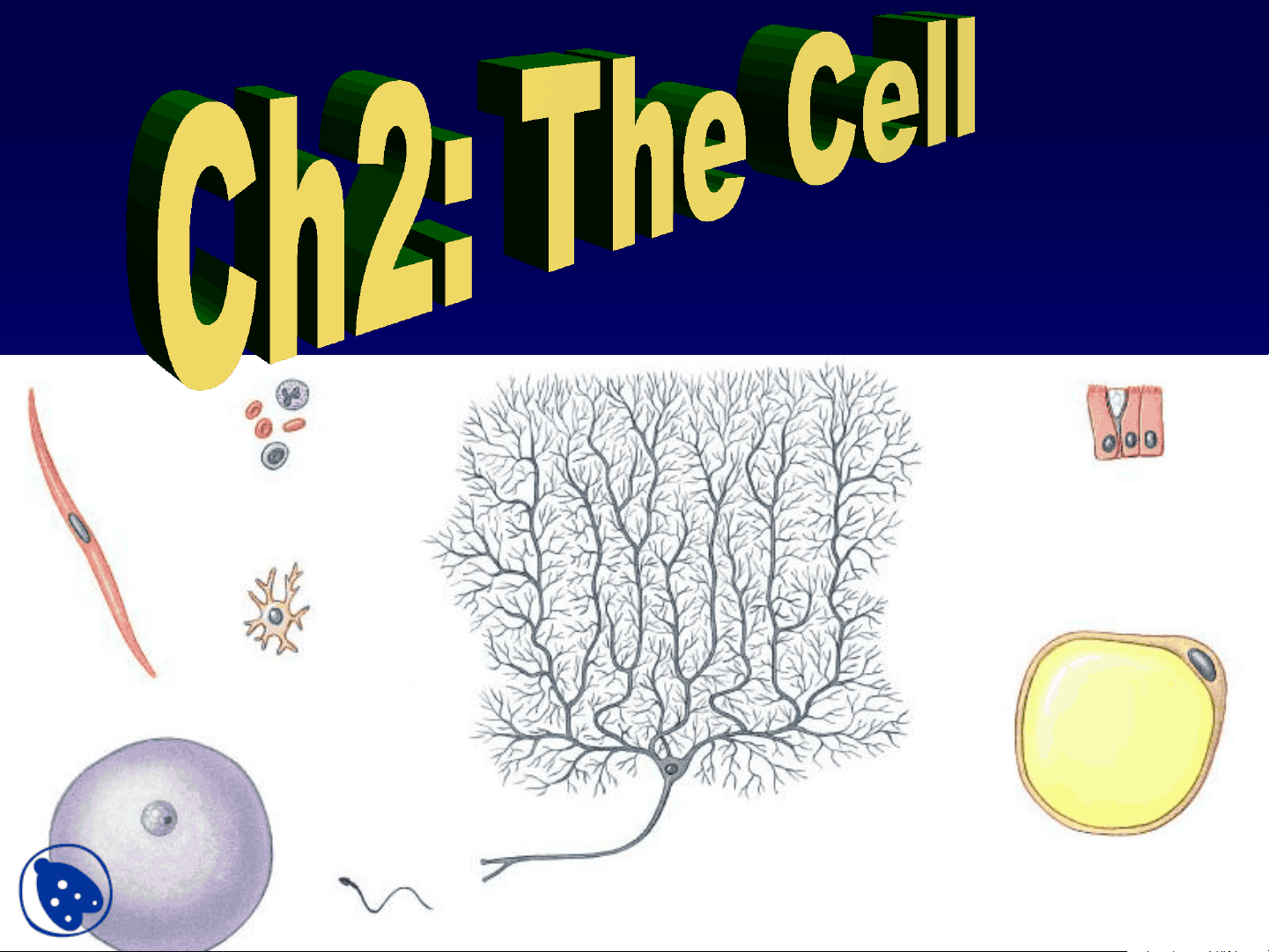
An in-depth exploration of the structure and function of a typical cell, focusing on the cell membrane, organelles, and intercellular attachments. Topics covered include the composition of the cell membrane, non-membranous organelles such as the cytoskeleton and ribosomes, membranous organelles like the nucleus, mitochondria, smooth and rough er, golgi apparatus, and lysosomes, as well as intercellular attachments such as gap junctions, tight junctions, and desmosomes.
Typology: Slides
1 / 20

This page cannot be seen from the preview
Don't miss anything!
What else is also part of the cell membrane?
Cell membrane (plasma membrane, plasmalemma)
Cytoskeleton
4 major components:
Fu: support & movement of cellular structures & materials
Compare to microvilli and flagellum
In 9+2 array
workbench for __________
Fixed vs, free ribosomes
Golgi Apparatus
vesicles come from?
Packaging and shipping of proteins
Cell membrane renewal
Docsity.com
Lysosomes
