Gasoline Combustion Thermodynamics: Calculating Energy Change & Piston Energy, Assignments of Ethics

A problem-solving exercise in thermodynamics, focusing on the combustion of gasoline in an automobile engine. Students will learn how to calculate the change in internal energy of the gases and the change in internal energy of the piston based on given data.

Typology: Assignments

2017/2018

Uploaded on 01/12/2022

michelle-richelle-macalantag
michelle-richelle-macalantag 🇵🇭

109 documents

1 / 1

Toggle sidebar

This page cannot be seen from the preview

Don't miss anything!

bg1
“WHAT EVER YOU DO, ALWAYS CHOOSE WHAT MAKES YOU HAPPY
“THE PURPOSE OF LIVES IS TO BE HAPPY, SO ENJOY EVERYTHING”
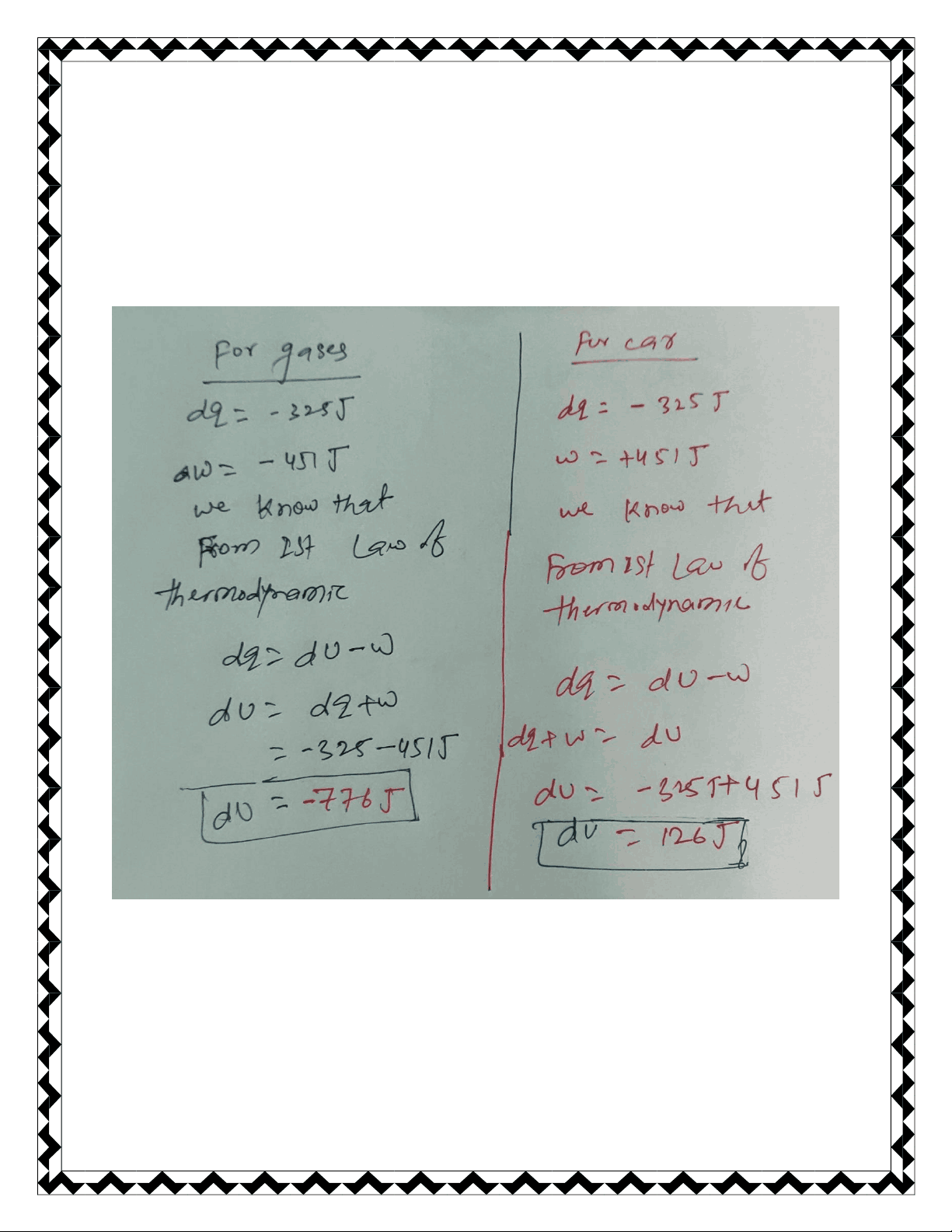
Question
When gasoline burns in an automobile engine, the heat released (325 J) causes the products CO2
and H2O to expand, which pushes the pistons outward. Excess heat is removed by the car’s cooling
system. If the work associated with the expanding gases is equal to 451 J, how much is the change
in internal energy of the gases? How much is the change in 2. internal energy of the piston?
Answer

Partial preview of the text

Download Gasoline Combustion Thermodynamics: Calculating Energy Change & Piston Energy and more Assignments Ethics in PDF only on Docsity!

“WHAT EVER YOU DO, ALWAYS CHOOSE WHAT MAKES YOU HAPPY”

“THE PURPOSE OF LIVES IS TO BE HAPPY, SO ENJOY EVERYTHING”

Question

When gasoline burns in an automobile engine, the heat released (325 J) causes the products CO and H2O to expand, which pushes the pistons outward. Excess heat is removed by the car’s cooling system. If the work associated with the expanding gases is equal to 451 J, how much is the change in internal energy of the gases? How much is the change in 2. internal energy of the piston?

Answer