
Understanding and Mitigating Ocean Acidification, Study notes of Biology

An in-depth explanation of ocean acidification, a phenomenon caused by increased carbon dioxide absorption in seawater. It discusses the chemical process, the impact on marine life, particularly organisms that rely on carbonate ions for growth, and the ways to limit its effects, primarily by addressing climate change and reducing fossil fuel use.

Typology: Study notes

2023/2024

Available from 06/10/2024

shivani-garg-8
shivani-garg-8 🇮🇳

2 documents

1 / 1

Toggle sidebar

This page cannot be seen from the preview

Don't miss anything!

bg1
MINIMIZING
OCEAN
ACIDFICATION
What
is
ocean
acidification?
When
carbon dioxide enters the ocean,
it
dissolves
in
saltwater. First,
it
forms
carbonic acid.
Then,
this carbonic acid
breaks
apart
-
or
"dissociates"-
producing
bicarbonate
ions
and
hydrogen
ions.
Ocean
acidification
results
from
an
increased
concentration
of
hydrogen
ions
and
a
reduction
in
carbonate
ions
due
to
the
absorption
of
increased amounts
of
CO2.
Clams,
mussels,
crabs,
corals,
and
other
sea
life
rely
on
carbonate
ions
to
grow
their
shells
and
thrive.
Ocean
acidification affects marine
life:
Coastal
and
marine
ecosystems
are
under
tremendous stress
from
climate
change.
Ocean
acidification,
paired
up
with
other
climate
impacts
like
warming
waters,
deoxygenation,
melting
ice,
and
coastal
erosion,
pose
real
threats
to
the
survival
of
many
marine
species.Ocean
acidification
is
particularly
detrimental
to
species
that
build their
skeletons
and
shells
from
calcium
carbonate
(like
clams,
mussels,
crabs,
phytoplankton,
and
corals),
and
that
constitute
the
bottom
of
the
food chain.
Acidification
reduces the
availability
of
carbonate ions
in
ocean water, which
provide
the
building
blocks
these
organisms
need
to
make
their
shells
and
skeletons,
significantly
reducing
the
chances
for
their
offspring
to
survive.
Way
to
limit
ocean
acidification:
The
most effective
way
to
limit
ocean
acidification
is
to
act
on
climate change,
implementing
solutions
to
dramatically
reduce
the
use
of
fossil fuels.
If
we
dramatically
cut
our
global
warming
emissions, and we
limit
future warming,
we
can
significantly
reduce
the
harm
to
marine
ecosystems.
OPPO
Notes

Partial preview of the text

Download Understanding and Mitigating Ocean Acidification and more Study notes Biology in PDF only on Docsity!

MINIMIZING OCEAN ACIDFICATION

What is ocean acidification?

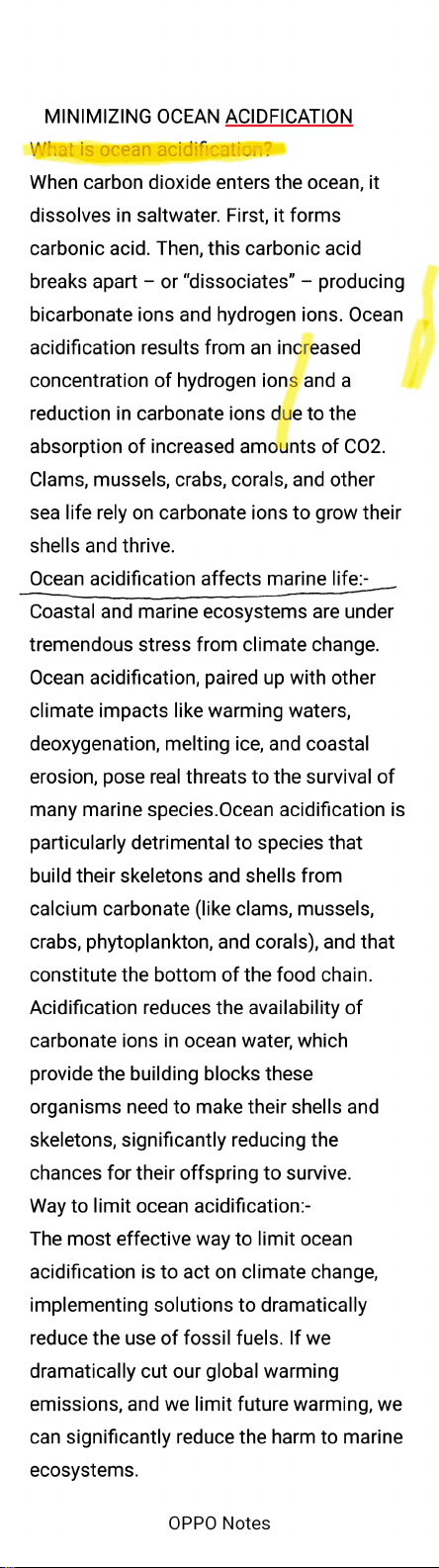
When carbon dioxide enters the ocean, it dissolves in saltwater. First, it forms carbonic acid. Then, this carbonic acid

breaks apart - or "dissociates"-producing

bicarbonate ions and hydrogen ions. Ocean acidification results from an increased concentration of hydrogen ions and a reduction in carbonate ions due to the absorption of increased amounts of CO2. Clams, mussels, crabs, corals, and other sea life rely on carbonate ions to grow their shells and thrive. Ocean acidification affects marine life: Coastal and marine ecosystems are under tremendous stress from climate change. Ocean acidification, paired up with other climate impacts like warming waters, deoxygenation, melting ice, and coastal erosion, pose real threats to the survivalof many marine species.Ocean acidification is particularly detrimental to species that build their skeletons and shells from

calcium carbonate (like clams, mussels,

crabs, phytoplankton,and corals), and that

constitute the bottom of the food chain. Acidification reduces the availability of carbonate ions in ocean water, which provide the building blocks these organisms need tomake their shells and skeletons, significantly reducing the chances for their offspring to survive. Way to limit ocean acidification: The most effective way to limit ocean acidification is to act on climate change, implementing solutions to dramatically reduce the use of fossil fuels. If we

dramatically cut our global warming emissions, and we limit future warming, we can significantly reduce the harm to marine ecosystems.

OPPO Notes