
Physics 4B Exam 2, March 18, 2004, Exams of Physics

An old physics exam from university of california, berkeley's physics 4b course. It includes instructions for the exam, a list of equations and constants from chapters 26, 27, and 28, multiple choice and short answer questions, and problems to be solved. The exam covers topics such as capacitance, energy storage in capacitors, drift velocity of electrons, and ohm's law.

Typology: Exams

Pre 2010

Uploaded on 07/30/2009

koofers-user-vni-1
koofers-user-vni-1 🇺🇸

10 documents

1 / 6

Toggle sidebar

This page cannot be seen from the preview

Don't miss anything!

bg1
Physics 4B 12/2/2020
EXAM 2
March 18, 2004
Name:____________________
Rules for Exam:
1. Calculators are allowed, but you may not share one.
2. Show your work on non-multiple choice problems. NO WORK=NO CREDIT.
3. Include units with each answer. One point deduction per infraction.
4. Points will be deducted for students that refuse to turn in their exams, when asked to do so (at
the end of class).
5. Round off to 2 decimal places and circle your final answers.
6. Circle your final answers.
Good Luck!
Equations, Conversion Factors and Constants:
Chapter 26
Eplates vacuum=/
C=q/V
Ceq=C1+C2+..
1/ Ceq=1/ C1+ 1/C2+…
U=1/2CV2
U=1/2E2
=k
C=A/d
=pxEpxE
U=-pE
Chapter 27
I=dQ/dt
J=I/A=nqvd
J=pxEE=pxEE/
R=L/A=V/I
vd=pxE(q/m)E
=me/(nq2)
[1+(T-To)]
P=IV=V2/R
Chapter 28
Req=R1+R2+..
1/Req=1/ R1+ 1/R2+…
q(t)=Qmax(1-e-t/RC)
I(t)=Ioe-t/RC
q(t)=Qmaxe-t/RC discharge
q(t)=-(Qmax/RC)e-t/RC discharge
Scores
Part 1 (24 pts)
Problem 1 (16 pts)
Problem 2 (15 pts)
Problem 3 (15 pts)
Problem 4 (15 pts)
Problem 5 (15 pts)
Problem 6 (20 pts)
TOTAL (120 max)
% (out of 115)
1
k= 8.99x10
9
Nm
2
C
2
ε
o
= 8.85x10
−12
C
2
Nm
2
q
e
= 1.602x10
−19
C
m
e
= 9.11x10
−31
kg
m
p
= 1.67x10
−27
kg
1μC = 10
−6
C= 10
3
nC = 10
6
pC
1μA = 10
−6
A= 10
−3
mA
pf3
pf4
pf5

Partial preview of the text

Download Physics 4B Exam 2, March 18, 2004 and more Exams Physics in PDF only on Docsity!

EXAM 2

March 18, 2004

Name:____________________

Rules for Exam:

1. Calculators are allowed, but you may not share one.

2. Show your work on non-multiple choice problems. NO WORK=NO CREDIT.

3. Include units with each answer. One point deduction per infraction.

4. Points will be deducted for students that refuse to turn in their exams, when asked to do so (at

the end of class).

5. Round off to 2 decimal places and circle your final answers.

6. Circle your final answers.

Good Luck!

Equations, Conversion Factors and Constants:

Chapter 26

Eplates vacuum=/ C=q/V Ceq=C 1 +C 2 +.. 1/ Ceq=1/ C 1 + 1/C 2 +… U=1/2CV^2 U=1/2E^2 =k C=A/d  =pxEpxE U=- pE Chapter 27 I=dQ/dt J=I/A=nqvd J=pxEE=pxEE/  R=L/A=V/I vd=pxE( q/m) E =me/(nq^2 ) [1+(T-To)] P=IV=V^2 /R Chapter 28 Req=R 1 +R 2 +.. 1/Req=1/ R 1 + 1/R 2 +… q(t)=Qmax(1-e-t/RC) I(t)=Ioe-t/RC q(t)=Qmaxe-t/RC^ discharge

q(t)=-(Qmax/RC)e-t/RC^ discharge

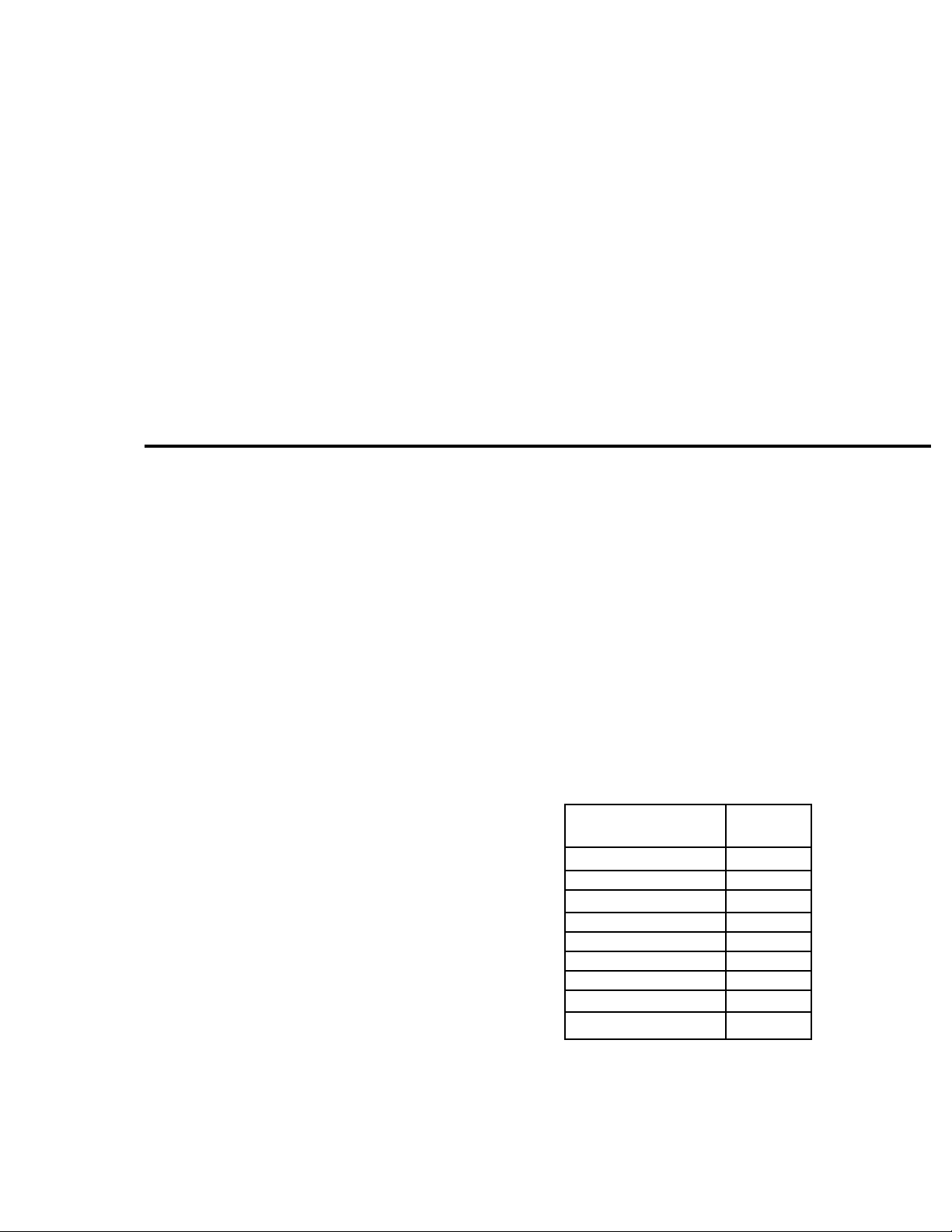
Scores Part 1 (24 pts) Problem 1 (16 pts) Problem 2 (15 pts) Problem 3 (15 pts) Problem 4 (15 pts) Problem 5 (15 pts) Problem 6 (20 pts) TOTAL (120 max) % (out of 115)

k = 8. 99 x 109 Nm^2 C^2 εo = 8. 85 x 10 −^12

C^2

Nm^2 qe = 1. 602 x 10 −^19 C me = 9. 11 x 10 −^31 kg mp = 1. 67 x 10 −^27 kg 1 μC = 10 −^6 C = 103 nC = 106 pC 1 μA = 10 −^6 A = 10 −^3 mA

Multiple choice and short answer questions (4 points each, unless noted)

The figure below shows four parallel plate capacitors: A, B, C, and D. Each capacitor carries the same charge q and has the same plate area A. As suggested by the figure, the plates of capacitors A and C are separated by a distance d while a distance 2d separates those of B and D. Capacitors A and B are maintained in vacuum while capacitors C and D contain dielectrics with constant k = 4.

  1. Which list below places the capacitors in order of increasing energy? A. A, B, C, D B. C, D, A, B C. A, B, D, C D. B, A, D, C E. D, C, B, A
  2. Which capacitor has the largest potential difference between its plates? A. A B. B C. C D. D
  3. Which of the following wiring diagrams could be used to experimentally determine R using Ohm’s Law? Assume an ideal voltmeter and an ideal ammeter.
  4. When a capacitor is discharged, what fraction of its initial energy remains after one time constant? A. 0. B. 0. C. 0. D. 0. E. Answer depends on energy that was stored initially. vacuum dielectric k=
  1. A 75.0 and a 45.0 resistor are connected in parallel. When this combination is connected across a battery, the current delivered by the battery is 0.294 A. When the 45.0  resistor is disconnected, the current from the battery drops to 0.116A. Determine the EMF of the battery and internal resistance of the battery (15 points).

EMF=8.98V

R=2.4

  1. In the circuit shown, below bulb B has twice the power rating of bulb C and one-half the power rating of bulb A. All bulbs have the same voltage rating. What is the ratio of the power dissipated by bulbs B and C to the power dissipated by bulb A. Hint: express all resistances in terms of RA (15 points)? 1/
  1. Two capacitors one of 2F and the other of 7F are connected in series to a 180V power supply. The capacitors are then disconnected from each other without discharging them. Next the positive terminals of the two capacitors are connected together. And their negative terminals are also connected together. What is the charge on each capacitor? (15 points).

Q 2 =124C

Q 7 =436C

  1. An RC circuit consists of a resistor with resistance 3.0 k, a 120-V battery, and two capacitors, C1 and C2, with capacitances of 40 μF and 110 μF, respectively. Initially, the capacitors are uncharged; and the switch is closed at t = 0. What is the voltage across the resistor and the rate in which energy is being stored in C 2 after 0.90s have elapsed? ( points)? VR=16.2V P=0.411W 3.0 k