



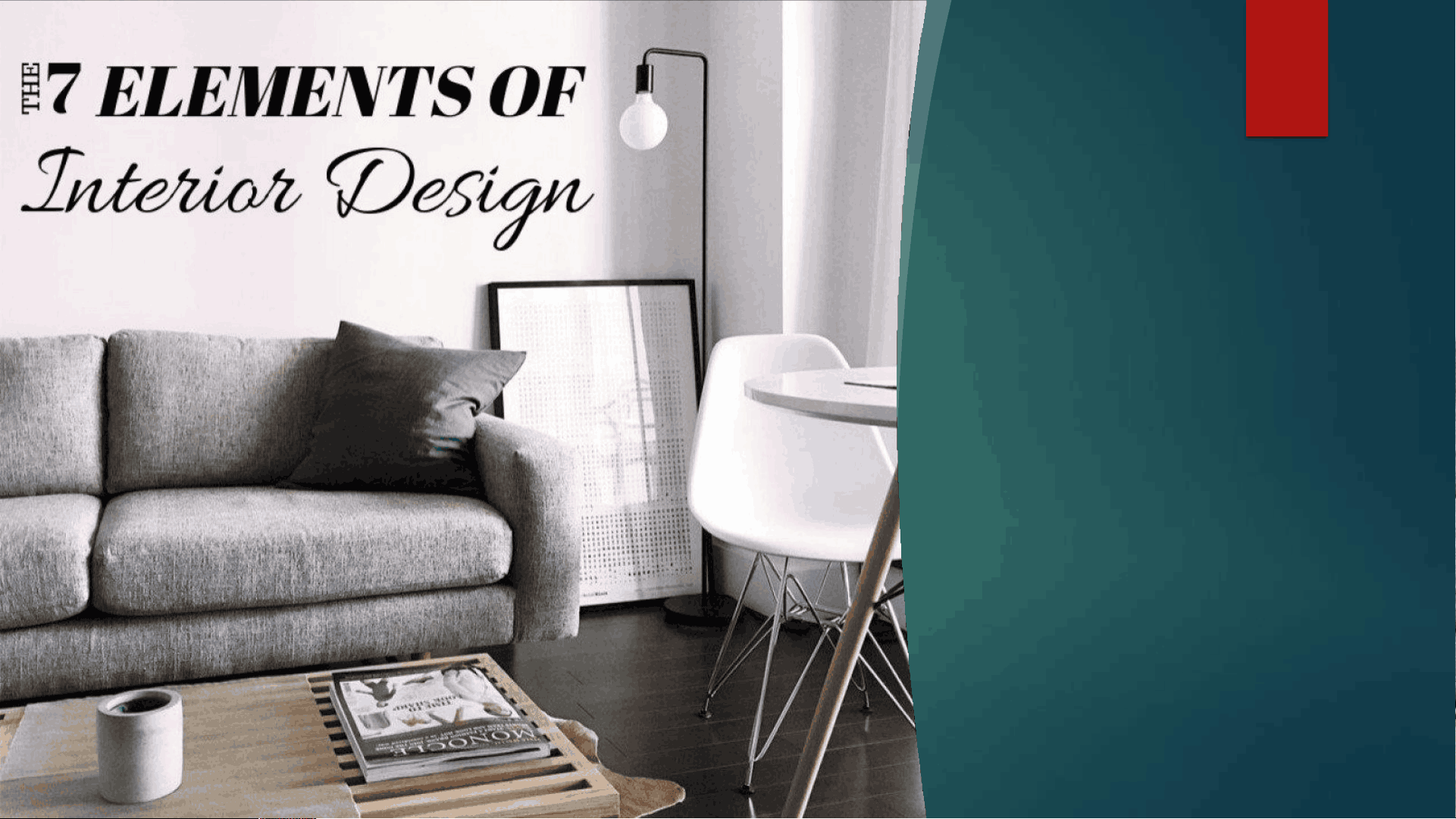
Role of
elements
of design
in interior
design
Hajra Imran


Study with the several resources on Docsity

Earn points by helping other students or get them with a premium plan

Prepare for your exams
Study with the several resources on Docsity
Earn points to download
Earn points by helping other students or get them with a premium plan
An in-depth exploration of the seven fundamental elements of design in interior design: space, lines, forms, light, textures, patterns, and colors. Each element is discussed in detail, including their functions, types, and effects on the overall design of a room. Learn how to balance positive and negative space, use horizontal and vertical lines to manipulate the perception of height and width, and select appropriate textures, patterns, and colors to create the desired ambiance.
Typology: Assignments
1 / 34

This page cannot be seen from the preview
Don't miss anything!
Hajra Imran
Space is the foundation of a room. It refers to the two- dimensional floor space, as well as the three- dimensional volume in a room. There are walls, floors and ceilings as your boundaries, and you think not only of length and width, but also the height of the space. Another thing about space is the concept of positiveand negative space. A space containing furniture or decor items is known as positive space. Anything else is called negative space. There must be a balance between these two so that your room looks neither crowded nor empty.
There are three types of lines:
If you want to make a room seem higher, add vertical lines
