Download Linux Inter-Process Communication: Message Queues, Shared Memory, and Sockets - Prof. Pras and more Study notes Operating Systems in PDF only on Docsity!
����������
� � ���������� �� �������
�������� ������
�
��^
�^ �����
n^ What is a process? n^ What is process scheduling? n^ What are the common operations on processes? n^ How to conduct process-level communication? n^ How to conduct client-server communication?
����������
� � ���������� �� �������
�������� ������
�
�^ �����
n^ Process^ l^
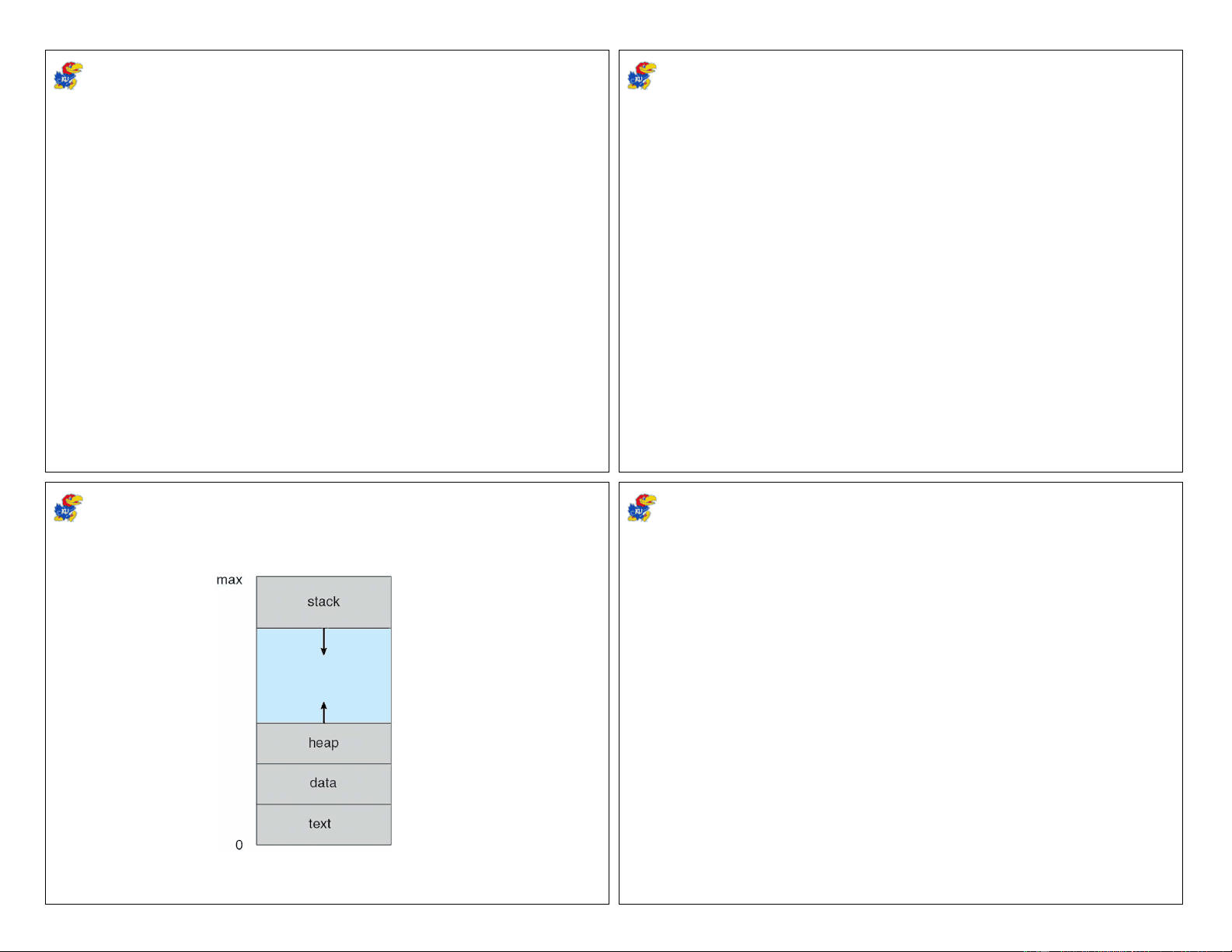
is a program in execution l is an instance of a computer program being sequentially executed l process execution must progress in sequential fashion l process is also called a
job
n^ Program Vs. process^ l^
program is a
passive
entity; process is an
active^
entity
l^ program only contains text; process is associated with code, data, PC,heap, stack, registers, and other information l^ program becomes a process when an executable file is loaded intomemory l^ same program executed multiple times will correspond to differentprocess each time
����������
� � ���������� �� �������
�������� ������
�
�^ ����������
����������
� � ���������� �� �������
�������� ������
�^ ���������
n^ During execution, the process may be in one of the following^ states^ l^
new – process is being created l running – instructions are being executed l waiting – waiting for some event to occur l ready – waiting to be assigned a processor l terminated – process has finished execution
n^ Each processor can only run one process at a instant.
����������
� � ���������� �� �������
�������� ������
!
��^
�^ ���������
����������
� � ���������� �� �������
�������� ������
�
�^ �����
n^ PCB is representation of a process in an operating system.^ l^
maintains process-specific information l necessary for scheduling
n^ Information associated with each process^ l^
process state l program counter l CPU registers l CPU scheduling information l memory-management information l accounting information l I/O status information
����������
� � ���������� �� �������
�������� ������
�
�^ �����
����������
� � ���������� �� �������
�������� ������
�
�^ ������ ��
�^ ��
�^
�^ �
����������
� � ���������� �� �������
�������� ������
��
�^ ���+������ �
n^ A^ context switch
is the process of storing and restoring the
state (
context
) of the CPU such that multiple processes can
share a single CPU resource^ l^ for time-shared or multiprogramming environments^ l^ context
of a process represented in the PCB l^ context switch involves a state
save^ of the current process, and a state
restore
of the process being resumed next l^ switch from
user^ to
kernel^
mode or vice-versa is a
mode^ switch
n^ Context-switch time is overhead^ l^
the system does no useful work while switching l overhead depends on hardware support^ �^ Sun UltraSPARC provides multiple banks of registers^ �^ Intel x86 processors also provide some support
����������
� � ���������� �� �������
�������� ������
�
�^ ����������
n^ Any process can create other processes during its execution^ l^
operating systems have a
primordial
process
l^ creating process called
parent process
l^ new process called
child^ process
l^ processes identified and managed via
a process identifier
( pid )
n^ Resource sharing options^ l^
parent and children share all resources l children share subset of parent’s resources l parent and child share no resources
n^ Execution options^ l^
parent and children execute concurrently l parent waits until children terminate
����������
� � ���������� �� �������
�������� ������
�!
�^ ����������
n^ Address space options^ l^
child duplicate of parent l child has a program loaded into it
n^ UNIX examples^ l^
fork^ system call creates new process l exec^ system call used after a
fork^ to replace the process’ memory
space with a new program
����������
� � ���������� �� �������
�������� ������
��
�^ ����������
�����������^ ���
�����������������
��������� �^ �������������^ �^ ������
����������������� ��� �^ ��������
���������������� �� �^ ���!"�#���������^ �^ ������� �������� � ��������� �^ ���^ ���$��������������%&''�#����� ����^ ������ ������������^ ������(����(���������������� ������� �������(�����%&''���������)��� �)�� �������^ �����#
����������
� � ���������� �� �������
�������� ������
��
�^ ����������
n^ Parent waiting for child process to finish
����������
� � ���������� �� �������
�������� ������
��
�^ ����-��������
n^ Process terminates after executing last statement^ l^
can explicitly invoke the
exit^ system call to terminate
l^ OS implicitly calls exit l^ child can pass return status to parent (via
wait )
l^ process resources are deallocated by operating system n Parent may terminate execution of children processes (
abort )
l^ child has exceeded allocated resources l^ task assigned to child is no longer required l^ if parent is exiting^ �^ some operating system do not allow child to continue if its parentterminates^ �^ all children terminated -
cascading termination
����������
� � ���������� �� �������
�������� ������
��
n^ Communication within the same system. n^ Processes may need to
co-operate
for several reasons
l^ information sharing l^ computation speedup l^ modularity l^ convenience n Cooperating process can affect or be affected by otherprocesses l^ typically, by sharing data n Cooperating processes need
interprocess communication
( IPC )
����������
� � ���������� �� �������
�������� ������
��
�^ !" ��.�
�^ /���
n^ Common paradigm for co-operating processes^ l^
producer
process produces information l^ consumer
process consumes the produced information
n^ Processes need synchronization^ l^
consumer
cannot use information before it is produced by the
producer
n^ Abstraction models^ l^
unbounded-buffer
places no practical limit on the size of the buffer l^ bounded-buffer
assumes that there is a fixed buffer size
����������
� � ���������� �� �������
�������� ������
�!
n^ Indirect communication^ l^
messages are directed and received from mailboxes (also referredto as ports)^ �^ send
(A, message) – send a message to mailbox A �^ receive
(A, message) – receive a message from mailbox A l^ each mailbox has a unique id l^ processes can communicate only if they share a mailbox l^ properties of communication link^ �^ link may be associated with many processes^ �^ each pair of processes may share several communication links^ �^ link may be unidirectional or bi-directional^ �^ multiple receivers may need synchronization l^ mailbox can be held in the process address space or in the kernel
����������
� � ���������� �� �������
�������� ������
��
n^ Synchronization^ l^
message passing may be either blocking (synchronous) ornon-blocking (asynchronous) l blocking send
has the sender block until the message is received l^ blocking receive
has the receiver block until a message is available
l^ non-blocking
send has the sender send the message and continue l^ non-blocking
receive has the receiver receive a valid message or null
n^ Buffering – queue of messages attached to the link^ l^
zero capacity – 0 messages^ �^ Sender must wait for receiver l bounded capacity – finite length of
n^ messages
�^ Sender must wait if link full l unbounded capacity – infinite length �^ Sender never waits
����������
� � ���������� �� �������
�������� ������
��
n^ Provides multiple modes of IPC^ l^
pipes l FIFOs (names pipes) l message queues l shared memory l sockets
����������
� � ���������� �� �������
�������� ������
��
n^ Most basic form of IPC on all Unix systems^ l^
also provides a useful command-line interface
n^ Conduit for two processes to communicate n^ Issues to be addressed^ l^
is communication unidirectional or bidirectional?^ �^ Unix pipes only allow unidirectional communication l should communication processes be related?^ �^ anonymous
pipes can only be constructed between parent-child
l^ can pipes communicate over a network^ �^ processes must be controlled by the same OS n Pipes exist only until the processes exist l^ pre-mature process exit may cause data loss n Data can only be collected in FIFO order
����������
� � ���������� �� �������
�������� ������
��
����� �������� +�,����� �����
��+�, *����� ��������-+�,������������������������������������������������������$��."�/01������� �./
�������� ��������22)3�456�3 ���-�/��78������������������������������������������ �����
� �+�� .�1����� ��� �������� ��-�� ������� �� ."1�����(�����-+���� � ��� �� ��������������������������������������������(������������(����!�� �������� � �������(������ �."1��������������� ��������������������������������������������9��������$����� ������������������ �������� � ���������� �� �.�1��$�������������� ���������������������������������� �������� �.�1�: ��� �."1�: 8����� �.�1��� �."1���(�����"��$�������������� ��#^
����������
� � ���������� �� �������
�������� ������
��
'^ ��,+������������
����������������������������������������$��."�/01 �������� �./1 ������������������22)3�456�3 ���-�/��7+�;� �� ��-����/8������������������������������������� � �������� � ��� �� ��������������������������������������������������(� �����������-���������������������������� ��������������������������������������������������������� � ������+�<�������� ����� ����������� ��-�������� � �������������� ���� ��� �� +������(������ �."1��������������� ������� ����� �����������������#��������������������������������� ������ ������������������� �� �.�1��$�������������� ���(�����"��$�������������� �#�
����������
� � ���������� �� �������
�������� ������
��
��^
�^ ������� ��
����������������������������������������������$��."�/01 ���������������� �./1 ���������������������������22)3�456�3 ���-�/��7+�;� �� ��-����=8������������������������������������������ � ���������� � ��� �� ������������������������������������������������� ��������������������������������� � ������+����������� �������)��� ������"8��� �������� �� �.�1������������������� �������)��� ������/8��� ���#������
�� ��������������������� ������ ������������� �������;�����������"8��� ������(������ �."1��$������������������ �������;�����������/8��� ���#��������������������������������#�
����������
� � ���������� �� �������
�������� ������
��
n^ Pipes commonly used in most Unix shells^ l^
output of one command is input to the next command l example:
n^ ���������� ��� � � �
l^ create a process to run
l^ create a process to run
l^ create a pipe from
to^ ����
l^ the standard output of the process to run
is redirected to a pipe
streaming to the process to run
l^ the standard input of the process to run
����^ is redirected to be the pipe
from the process running
����������
� � ���������� �� �������
�������� ������
��
�^ ����� �� �������^ �
����� ��
��^ ������������������ ���^ ���������
� �������^
��^ � �������������������� ���� ���� ��������������
������ �������� ������ ��������������������������������
�������������
�!"#^
"$^ �!%#
"$!&'�'"()*��
� �������^
������������
��^ ����������
���� ������
������+(('
�,-.�^
� �^ ��/��0�'1���+��
������^
��������
����� ��������������2��
��������3�
����^
��������
� ����������
�����������
���^ �����������
����� ����������
����� ��������������2 �����������3�
�� �����������������
��� �^ ���+4�
+�� �������6����� ��� ��������������������������^ �1�����
������������������
�^ ��
����� ��
� �������
�������1��������
��!&'�"7!8��9#::�� �������������������������������������������������������� ���^
���� ;�
����������
� � ���������� �� �������
�������� ������
��
n^ Message passing in Linux is done via
message queues
n^ msgget –
create a new message queue
l^ return existing queue identifier if it exists n msgsnd –
send a message to the queue
l^ each message should be in a buffer like,^ ���������- $����������-���J
�."^
l^ ���� ��� ������ ��������� ��� ��� ������� n msgrcv –
receive message from the queue
l^ ��J �
can be used to get specific messages
n^ msgctl –
perform control operations specified by
cmd
l^ second argument, we use it to terminate queue
����������
� � ���������� �� �������
�������� ������
��
n^ Multiple processes share single chunk of memory. n^ Implementation principles^ l^
uniquely naming the shared segment^ �^ system-wide or anonymous name l specifying access permissions^ �^ read, write, execute l dealing with race conditions^ �^ atomic, synchronized access
n^ Most
thread
-level communication is via shared memory.
����������
� � ���������� �� �������
�������� ������
�
�^ ����� �� ���������������������������������������������������������������������������������^ �������
���^ � ���^ � ���
� �^ ����
�� ���^ ����
����3����<�0,� ���������^
������^
������^ ����^ � �
���� �������
�����
�������
���^ ���
�^ ����
�!&'�&"!=)*(����3���
�!"#^
"$^ �!%#
"��
���^ � � ����
������
� ���� �^ ���������
���^ ��9#::�����
��������������������������������������������������������������������������������������������������> �����
�� �^ �������������
��^ ���^
� �^ ����
�������
����
���� �^ ����
� �^ ����
���+(('
�,-.�^
� �^ ��/��0�'1���+��
��� �^ ���+4�
+���^ � �
����
���
��������������������������������������������������������������������������������������������������^ ����
��^ � ��
����^ ���
� �^ ����
�������
����
���^ �^ �
��^ � �^
����^
���
���^ ���
������
���^ ��!&'�"7!8��9#::��� ����������������������������������������������������������������������������������������������� ���^
��� ;
����������
� � ���������� �� �������
�������� ������
�
n^ shmget
– create shared memory segment
l^ IPC_PRIVATE
specifies creation of new memory segment of
size
rounded to the system page size l access permissions as for normal file access l returns identifier of shared memory segment
n^ shmat
– attach shared memory segment l must for every process wanting access to the region l segment identified by
segment_id
l^ system chooses a suitable attach address n shmctl –
performs the control operation specified by
cmd
l^ command is
IPC_RMID
to remove shared segment
n^ see program shared_memory2.c n^ Read man pages!
����������
� � ���������� �� �������
�������� ������
�
n^ Sockets^ l^
can be defined as an end-point for communications l two-way communication pipe l can be used in a variety of domains, including
Internet
n^ Unix Domain Sockets^ l^
communication between processes on the same Unix system l special file in the file system
n^ Mostly used for client-server programming^ l^
client^ sending requests for information, processing l server^ waiting for user requests l server performing the requested activity and sending updates to client
n^ Socket communication modes^ l^
connection-based, TCP l connection-less, UDP
����������
� � ���������� �� �������
�������� ������
�
n^ socket ( ) -
create the Unix socket
l^ ��������������� ������������J ������� �������� l^ ���
�� ��<� &%C@
n^ � ���������
����$�� ���������� �������������������� l
����J �
l^ �J^
�^ ��^
���^ �����
n^ �����������
�������������������� ������$�����-� l (^) l $�����-
����������
� � ���������� �� �������
�������� ������
n^ ������������
�������� ����������� l
l^ �� ���� �������� ���� ����� ����� � n ����������
���M� �����N��������N�� l
��$������M�
l^ ���� ����
n^ � ����������
����������
� � ���������� �� �������
�������� ������
�
��^
��#^
����������
� � ���������� �� �������
�������� ������
!�
n^ Remote Method Invocation (RMI)^ l^
Java mechanism (API) to perform RPCs l Java remote method protocol (JRMP) only allows calls from one JVM toanother JVM l CORBA is used to support communication with non-JVM code l client obtains reference to remote object, and invokes methods on them