Download Porter's Model of Competitive Rivalry-Information Technology-Lecture Handout and more Exercises Information Technology in PDF only on Docsity!
Lesson 39 PORTER’S MODEL OF COMPETITIVE RIVALRY
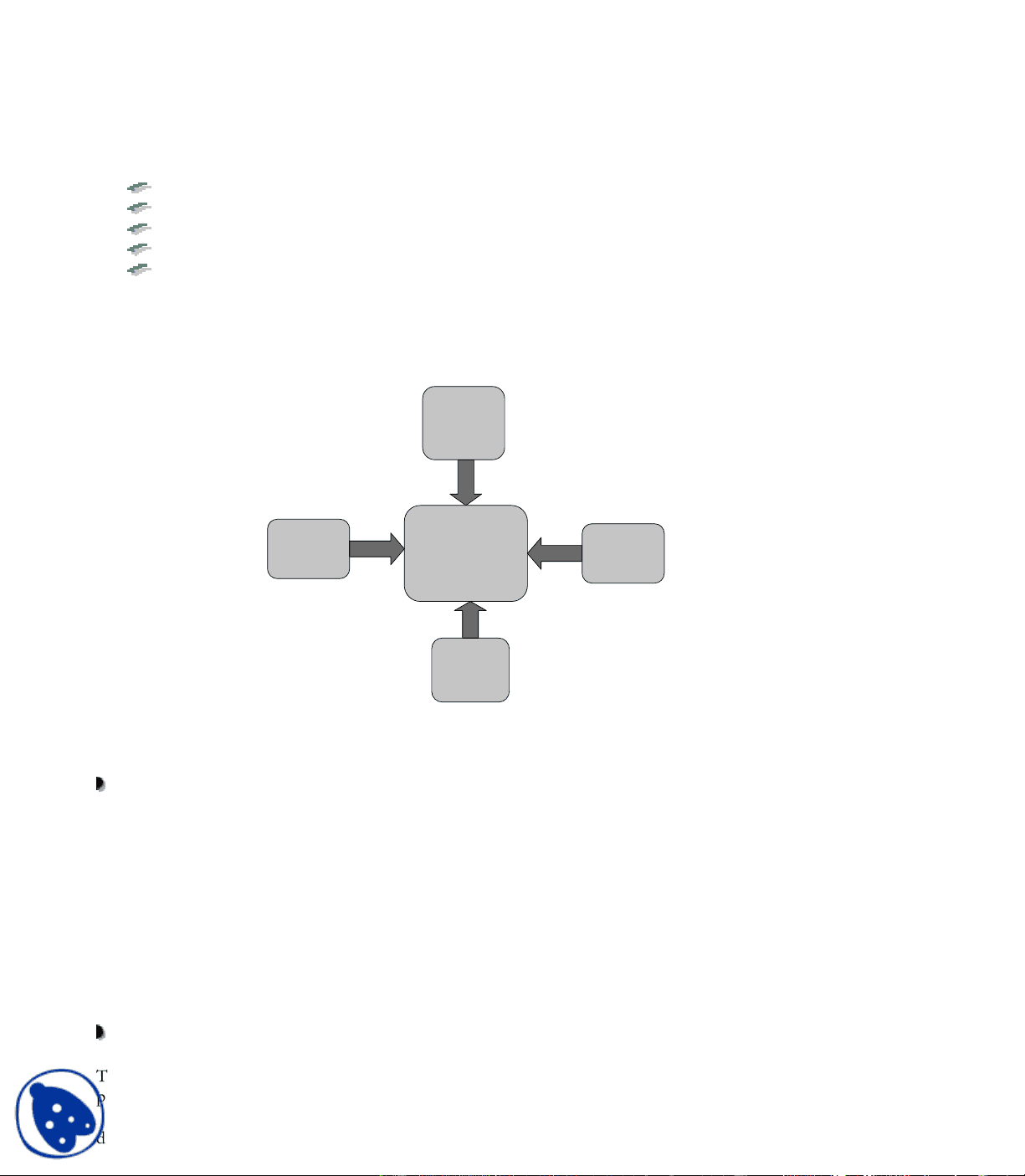
Porter’s Model helps a firm to identify threats to its competitive position and to devise plans including the use of IT and e-commerce to protect or enhance that position. Porter identified five forces of competitive rivalry described as under:
Threat of potential/new entrants to the sector Threat of substitute product or service in the existing trade Bargaining power of the buyers Bargaining power of the suppliers Competition between existing players
These five forces are also shown in Fig. 1 below:
Competitive rivalry among existing players
Threat of potential entrants
Bargaining power of suppliers
Bargaining power of buyers
Threat Of substitution
Fig. 1
Threat of new entrants
This threat relates to the ease with which a new company or a company in different product area can enter a given trade sector. Typically, barriers to entry are capital, knowledge or skill. IT/EC can be a barrier for new entrants, for instance, where competing businesses have heavily invested in EDI and are using the same, their investment would act as a barrier for new businesses to enter that trade sector. Conversely, advancements in technology have given rise to new ideas providing opportunity to new entrants without any need to build the IT infrastructure or make heavy investment to compete existing players. For example, to start online banking a company does not require heavy investment in constructing buildings (branch offices), hiring staff etc. as required in traditional banking. Rather, making use of internet technology coupled with a sound marketing plan, unique online banking services can be initiated.
Threat of substitution
This threat arises when a new product is available that provides the same function as existing product/service. For example, cotton fiber was, in the past, replaced by synthetic fiber, and glass bottles were substituted by plastic ones. This threat got materialized in case of music shops in physical world when due to the advent of e-commerce; music became available in downloadable format through the artist’s
website. The site, in fact, had provided a substitute distribution channel. Another example is that of online banking which substituted traditional banking in physical world.
Bargaining power of buyers
The cost of producing and distributing a product should be less than the price it can bring in the market in order to be profitable. Number of competitors and the supply of a product are the two major factors that determine bargaining power of the buyers. A buyer is in a strong position to bargain for low price if there are many competitors and/or the supply of the product in the market is in surplus. Note that with the help of e-commerce, low production cost, more inventory control and quick response time can be achieved. Besides, direct sale to the customers is also possible that cuts the cost of involving intermediaries. Therefore, a business using IT/EC can reduce the overall production cost and afford to keep the price of the product relatively low.
Bargaining power of suppliers
Businesses try to find more favorable terms from their own suppliers. If supply of raw material is plentiful and/or there are many suppliers, the supply can be procured at a low price. Otherwise, position is more favorable to the supplier having more bargaining power. Ability to trade electronically is a factor in the quality of service and may be a requirement of the buying organization. Accordingly, bargaining power of a supplier is reduced if it is not electronically enabled.
Competition between existing players
Competition among businesses is to get more buyers and trade at a price that produces an acceptable profit. If there are many players of the same size, capacity and strategy having little difference between their product/service, then there is fierce competition among them as regards the price of the product/service. Even a small change in the price of the product/service can be crucial for the business. Again, the use of EC can cause a significant difference by reducing administration/transaction cost, increasing efficiency of supply chain, improving product quality and customer service. The five force analysis determines attractiveness of the industry whether to enter that industry as a business or not.
Strategic Planning Cycle
E-business competitive strategy is normally formed and implemented according to a planning cycle which is called strategic planning cycle. There are four stages in this planning cycle as shown in Fig. 2 below:
Strategic Planning Cycle
Industry and Competitive Analysis
Strategy Formulation
Implementation
Performance Assessment or Strategy Reassessment Fig. 2