


Easy and Unique Notes of Economics for BSc, BS, MSc, MPhil, and Competitive Exams Preparation


Study with the several resources on Docsity

Earn points by helping other students or get them with a premium plan

Prepare for your exams
Study with the several resources on Docsity
Earn points to download
Earn points by helping other students or get them with a premium plan
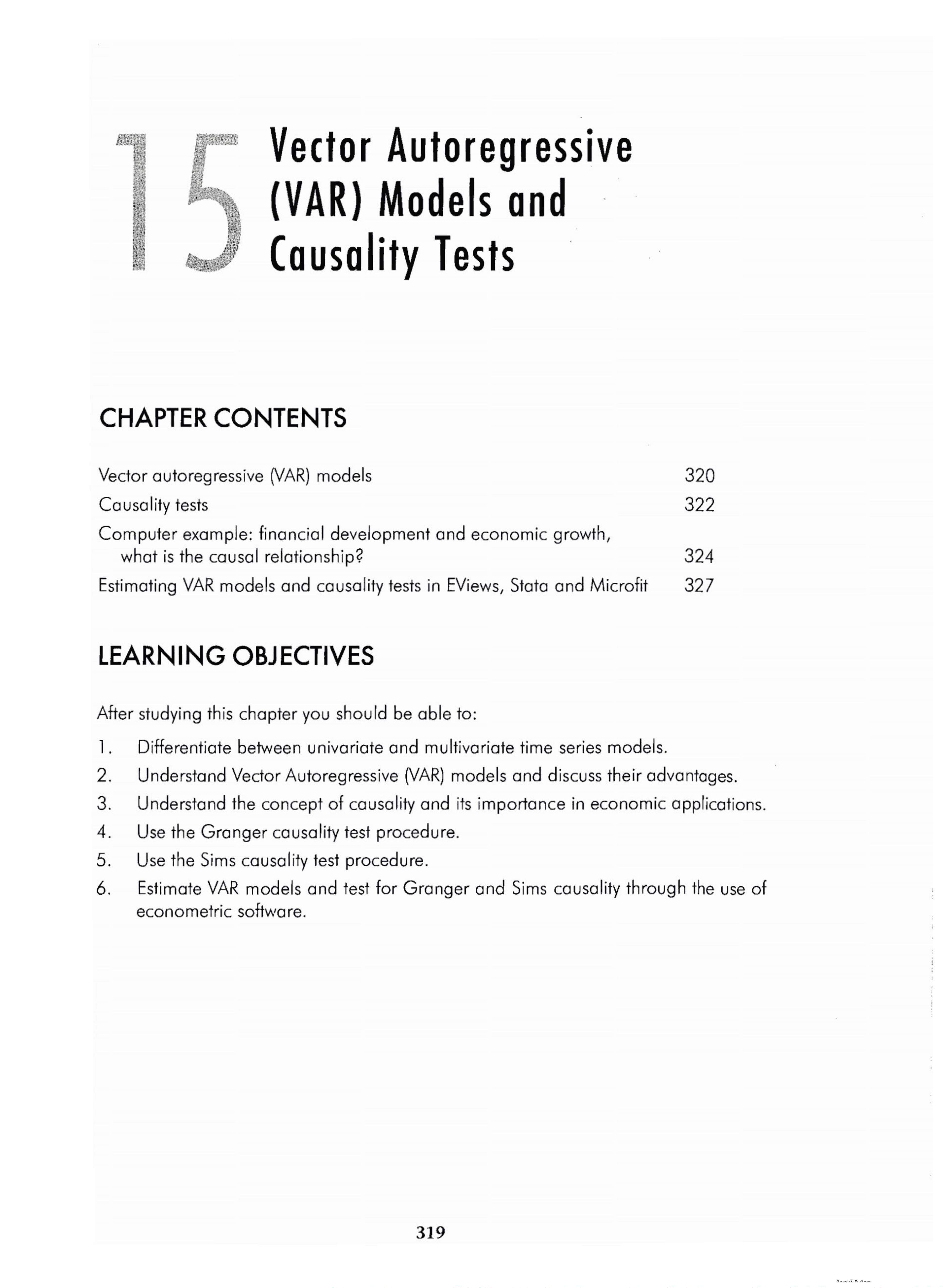
The concept of Vector Autoregressive (VAR) models and causality tests in economics. It discusses the importance of identifying endogenous and exogenous variables in simultaneous equations models and how VAR models treat all variables as endogenous. The Granger causality test procedure is explained in detail, along with a computer example of financial development and economic growth. The document also covers estimating VAR models and causality tests using econometric software like EViews, Stata, and Microfit.
Typology: Study notes
1 / 15

This page cannot be seen from the preview
Don't miss anything!
