Angry Madness-Game Theory For Managers-Handout, Exercises of Game Theory

Content of Game Theory for Managers course includes ratiinality, prisoner dilemma, Loyal servant, assurance, credibility, stratigic subtitutes, entry, brinkmanship, negotiation, auctions, signaling, reputation etc. This file contains: Angry, Madness, Negotiation, Game, Material, Document, Payoff, Possible, Yield

Typology: Exercises

2011/2012

Uploaded on 08/04/2012

muneb
muneb 🇮🇳

4.3

(37)

129 documents

1 / 3

Toggle sidebar

This page cannot be seen from the preview

Don't miss anything!

bg1
Angry Madness
Today we are playing the Angry Negotiation Game in class. As an optional follow-up,
you may enter our Computerized Angry Negotiation Tournament. To do this, respond to
Professor McAdams’ email later today.
Description of Computerized Angry Negotiation Tournament
You will play a slight variation of the game played in class. After Rounds 1-9, people
get angry with probability 25% (rather than 10% after Round 1, 20% after Round 2,
etc..) After Round 10, however, we still assume that people get Angry for certain.
Furthermore, half of the overall population of remaining players will survive each round.
(You and your opponent might both survive or both perish.)
Gold Medal: bonus = 15% of total course grade
Silver Medal: bonus = 10% of total course grade
Bronze Medal: bonus = 5% of total course grade
How do you want your computer agent to play?
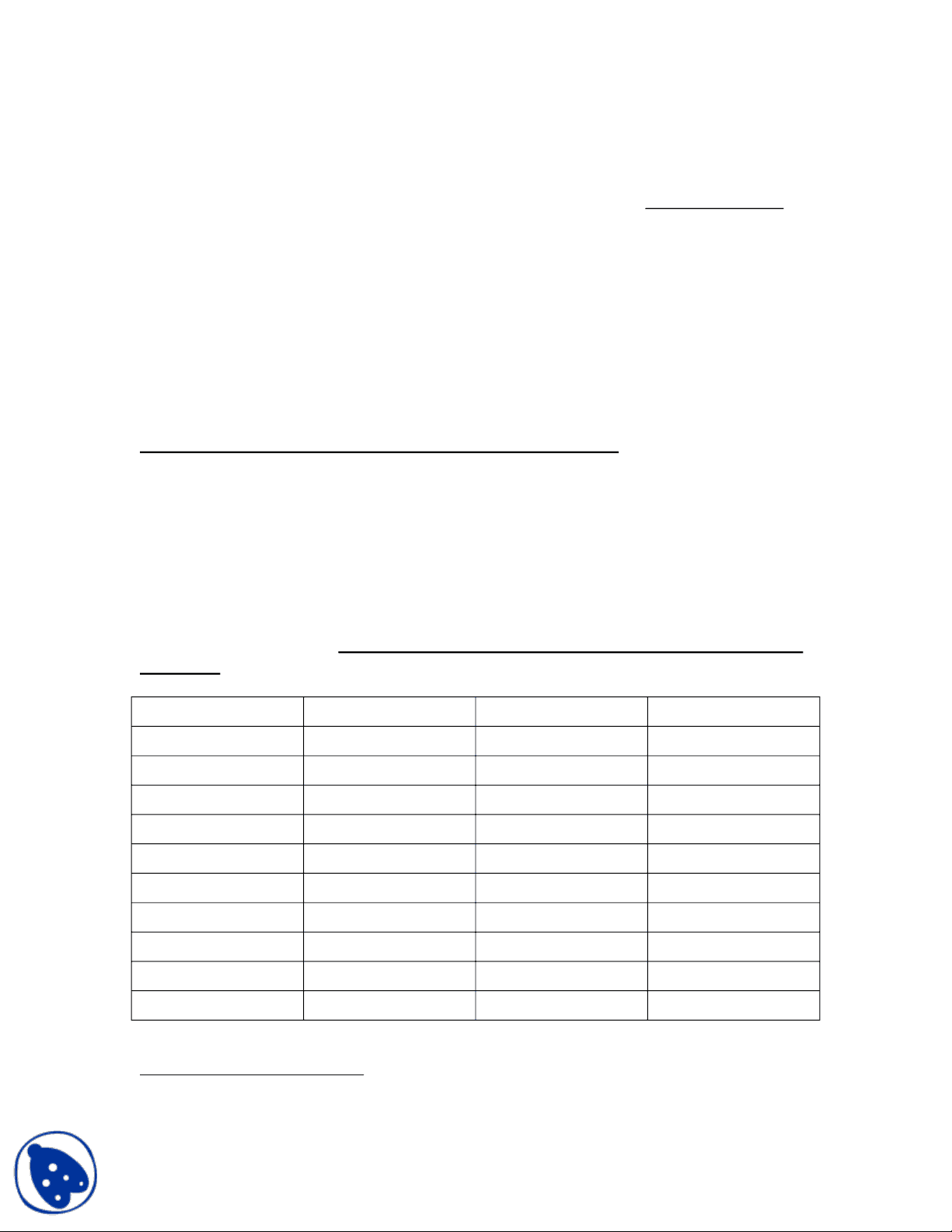
There are at most ten rounds. For each possible payoff you may get from yielding (M =
100, 200, or 400)1 specify how likely you will be to Yield in each round, if that round
is reached. (See Example on next pages.)
When M = 100 When M = 200 When M = 400
Round 1
Round 2
Round 3
Round 4
Round 5
Round 6
Round 7
Round 8
Round 9
Round 10
1 To keep things simple, I’ll use refer to you as Management. (This is business school, after all.) Half of
you will play as “Labor”, however, and half as “Management”, but you don’t know which.
docsity.com
pf3

Partial preview of the text

Download Angry Madness-Game Theory For Managers-Handout and more Exercises Game Theory in PDF only on Docsity!

Angry Madness

Today we are playing the Angry Negotiation Game in class. As an optional follow-up , you may enter our Computerized Angry Negotiation Tournament. To do this, respond to Professor McAdams’ email later today.

Description of Computerized Angry Negotiation Tournament

You will play a slight variation of the game played in class. After Rounds 1-9, people get angry with probability 25% (rather than 10% after Round 1, 20% after Round 2, etc..) After Round 10, however, we still assume that people get Angry for certain.

Furthermore, half of the overall population of remaining players will survive each round. (You and your opponent might both survive or both perish.)

Gold Medal: bonus = 15% of total course grade Silver Medal: bonus = 10% of total course grade Bronze Medal: bonus = 5% of total course grade

How do you want your computer agent to play?

There are at most ten rounds. For each possible payoff you may get from yielding (M = 100, 200, or 400)^1 specify how likely you will be to Yield in each round, if that round is reached. (See Example on next pages.)

When M = 100 When M = 200 When M = 400

Round 1

Round 2

Round 3

Round 4

Round 5

Round 6

Round 7

Round 8

Round 9

Round 10

(^1) To keep things simple, I’ll use refer to you as Management. (This is business school, after all.) Half of

you will play as “Labor”, however, and half as “Management”, but you don’t know which.

Unlike February Madness, luck will not at all be a factor in this tournament. In each match, I will compute each player’s exact expected payoff to determine the survivor.

Example: Ann vs Bart

Note: If you will be yielding 100% of the time if ever round R is reached, there is no way that round R+1 will be reached. That’s why those boxes are empty.

Ann’s Strategy

When M = $100 When M = $200 When M = $ Round 1 50% 0% 100% Round 2 100% 0% Round 3 0% Round 4 0% Round 5 0% Round 6 100% Round 7 Round 8 Round 9 Round 10

Bart’s Strategy

When U = $100 When U = $200 When U = $ Round 1 0% 50% 0% Round 2 0% 25% 0% Round 3 0% 75% 0% Round 4 100% 100% 0% Round 5 0% Round 6 0% Round 7 0% Round 8 0% Round 9 0% Round 10 0%