


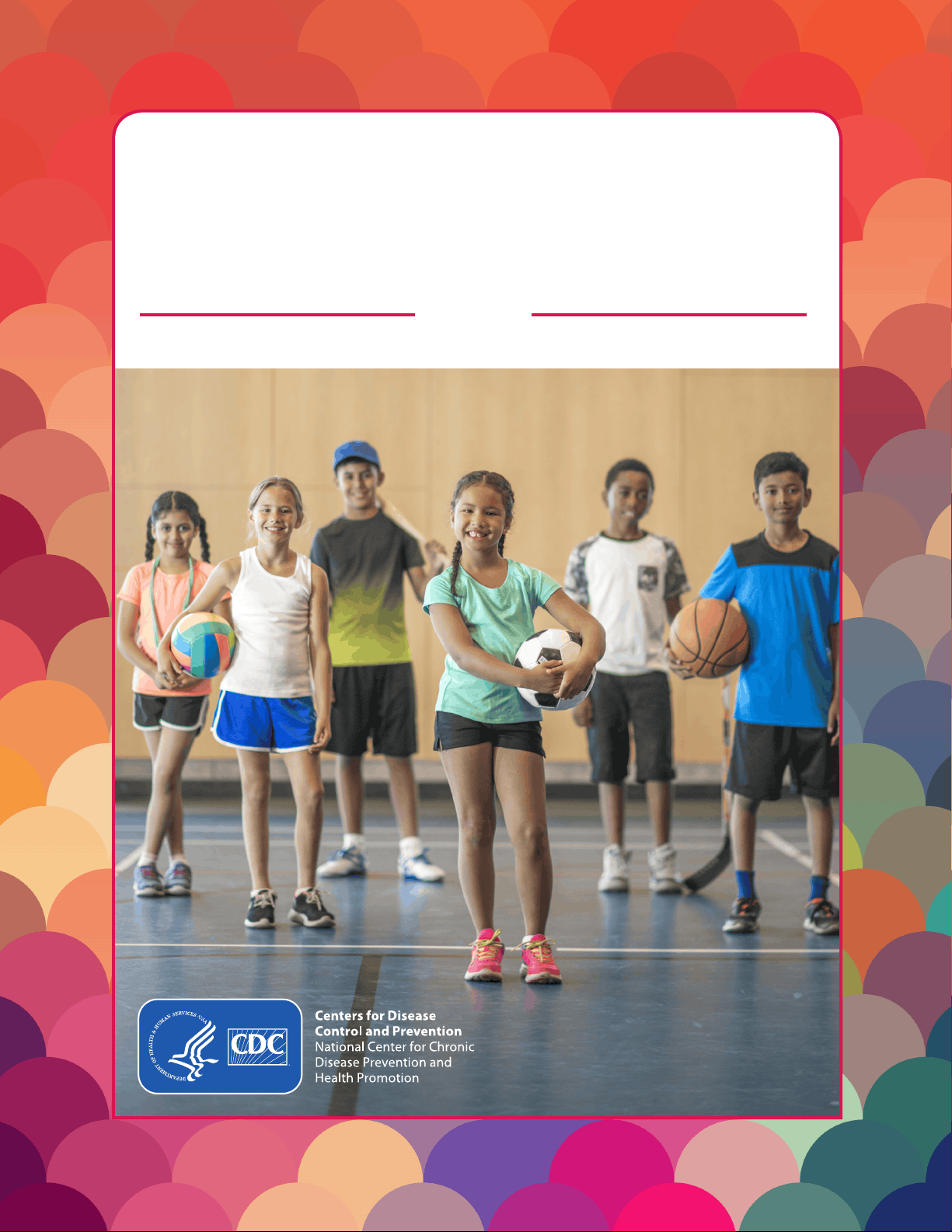
INCREASING PHYSICAL EDUCATION
AND PHYSICAL ACTIVITY:
A FRAMEWORK FOR SCHOOLS
2019


Study with the several resources on Docsity

Earn points by helping other students or get them with a premium plan

Prepare for your exams
Study with the several resources on Docsity
Earn points to download
Earn points by helping other students or get them with a premium plan
Physical activity is defined as any bodily movement produced by skeletal muscles that requires ... Comprehensive School Physical Activity Program (CSPAP) ...
Typology: Exercises
1 / 12

This page cannot be seen from the preview
Don't miss anything!
Schools are in a unique position to help children and adolescents get the nationally recommended 60 minutes of physical activity each day.1,2^ Through the Whole School, Whole Community, Whole Child (WSCC) model, schools can provide many opportunities for students to be physically active.^3 The WSCC model includes physical education and physical activity. It also helps to promote: ■ ■ The opportunities offered to students to be physically active before, during, and after school. The policies and practices schools use to provide physical education and physical activity before, during, and after school. A Comprehensive School Physical Activity Program (CSPAP) is a framework for planning and organizing activities for school physical education and physical activity.^4 It can help schools be strategic in addressing this aspect of the WSCC model. The goal of a CSPAP is to increase physical activity opportunities before, during, and after school and to increase students’ overall physical activity and health. Healthy and physically active students tend to have better grades, school attendance, cognitive performance (e.g., memory), and classroom behaviors (e.g., on-task behavior).5, This document explains the CSPAP framework for school physical education and physical activity and identifies key professional development opportunities and resources to help schools implement this framework.
Schools can use the Centers for Disease Control and Prevention’s (CDC’s) Comprehensive School Physical Activity Programs: A Guide for Schools to engage in a step-by-step process to develop, implement, and evaluate a CSPAP.^4 This process helps schools develop a yearly plan for physical education and physical activity that they can implement and evaluate. In addition, the CSPAP framework—as a whole or as individual components—can be included in local wellness policies and school improvement plans to further support and provide guidance on school physical education and physical activity policies and practices.
Schools can use the following resources (available online) to establish physical education and physical activity opportunities that address the needs of students, staff, families, and community members. Many public and private partnerships have also been created to support the CSPAP framework. General School Physical Education and Physical Activity Resources Action for Healthy Kids Resources and tools for schools. Free registration required to access these tools. Active Schools Resources, tools, and grant opportunities to create an Active School environment where physical activity is integrated before, during, and after school for at least 60 minutes every day. CDC: Comprehensive School Physical Activity Programs: A Guide for Schools (2013) Provides step-by-step guidance to schools and school districts to develop, implement, and evaluate comprehensive school physical activity programs. CDC: Health and Academic Achievement (2014) Provides a series of resources—including a Health and Academic Achievement overview document, public use PowerPoint slides, and podcasts—to help make the case for improving school physical activity and nutrition policies and practices to support health and learning. CDC: School Health Guidelines (2011) Serves as the foundation for developing, implementing, and evaluating school-based healthy eating and physical activity policies and practices for students. CDC: School Health Index (2017) Provides an online self-assessment and planning tool to help schools improve health and safety policies and practices, including those on physical education and physical activity. CDC: Secular Changes in Physical Education Attendance Among U.S. High School Students (2016) Explains the long-term trends in physical education attendance among US high school students over the past two decades. CDC: Tips for Teachers (2014) Provides information on low- and no-cost ways that teachers can support healthy eating and physical activity in the classroom. CDC: The Association Between School-Based Physical Activity, Including Physical Education, and Academic Performance (2010) Examines the existing research on the relationship between school-based physical activity, including physical education, and academic performance.
Healthier Generation Information about the Healthy Schools Program and resources for schools, including tools for physical education and physical activity. Free registration required to access these tools. National Association of Chronic Disease Directors: State School Health Policy Matrix (2014) Outlines and provides a direct link to relevant state policies in all 50 states for competitive foods and beverages, physical education and physical activity, and administration of medication in the school environment. National Physical Activity Plan Alliance: National Physical Activity Plan (2016) Provides a comprehensive set of policies, programs, and initiatives designed to increase physical activity in all segments of the US population. It specifically provides a section on the education sector. Rudd Center for Food Policy & Obesity: WellSAT 3.0 (2018) Measures the quality of written school district wellness policies. SHAPE America Information about and resources to support a Comprehensive School Physical Activity Program from the national professional association for health and physical educators. Springboard to Active Schools Resources and tools for schools to create environments supportive of physical education and physical activity through a Comprehensive School Physical Activity Program. Presidential Youth Fitness Program Information and resources to support the implementation of this program to help schools achieve excellence in physical education through quality fitness education and assessment practices. Targeted Professional Development Opportunities Alliance for a Healthier Generation’s Training Center Provides trainings on physical education and physical activity and provides opportunities to participate in online discussions facilitated by the Alliance’s national advisors. Free registration required. CDC: e-Learning Course on Comprehensive School Physical Activity Programs: A Guide for Schools Provides an overview of the five components and process (develop, implement, and evaluate) of a Comprehensive School Physical Activity Program. The course provides continuing education units (45–60+ minutes). Physical Activity Leader (PAL) Learning System Prepares school staff and other champions to be advocates for physical education and physical activity in their community. This half-day workshop provides online follow-ups with participants on a quarterly basis. Presidential Youth Fitness Program Online and In-Person Training Modules Includes topics that range from strategies for program implementation to the role of fitness education and assessment in whole school wellness programming and best practices for administering FitnessGram® assessments and use of resulting data. Free registration required for the online modules. In-person opportunities offered by certified state trainers. Key Resources by Topic
CDC: Physical Education Curriculum Analysis Tool (PECAT) (20 19 ) Helps school districts conduct a clear, complete, and consistent analysis of written physical education curricula, based on national physical education standards. SHAPE America: National Standards for K–12 Physical Education (2013) Defines what a student should know and be able to do as result of an effective physical education program. SHAPE America: The Essential Components of Physical Education (2015) Identifies the critical policies and practices that guide school districts and schools in developing an effective school physical education program. Springboard to Active Schools and CDC: Strengthening Physical Education in Schools Data Brief (2018) Shares national data that describes the state of physical education in schools in the United States and identifies key policies and practices that school districts and schools can put in place to promote and strengthen physical education.
Alliance for a Healthier Generation: Healthy Out-of-School Time Assessment (2011) Gives out-of-school sites a tool to assess policies for promoting healthy eating and physical activity and resources to help sites use the assessment results to develop an action plan. Alliance for a Healthier Generation and National Recreation and Park Association: Healthy Out-of-School Time Wellness Policy Implementation Guide for Parks and Recreation Agencies (2016) Provides real-life examples, best practices, and steps to help implement a wellness policy and create sustainable changes at out-of-school sites. Healthy Kids Out of School: Youth Sports Website Provides materials for youth sports organizations and videos for helping coaches increase the time children and adolescents are moving during practice. These materials can be used by anyone who engages young people in playing sports and team games. Healthy Out-of-School Time Coalition: National Afterschool Association Standards for Healthy Eating and Physical Activity (2011) Provides up-to-date, evidence-based, and practical quality standards for providing children with healthy food, beverages, and physical activity during out-of-school time. SHAPE America: Before- and After-School Physical Activity and Intramural Sport Programs (2013) Provides an overview of the goals and guiding principles for before-school and after-school physical activity and intramural sport programs.
Kaiser’s Thriving Schools: School Employee Wellness Resource Page Provides ideas on how to add physical activity to the school environment to support school staff. National Association of Chronic Disease Directors: Healthy School, Healthy Staff, Healthy Students: A Guide to Improving School Employee Wellness (2018) Provides a suggested process and resources for building or expanding an effective employee wellness initiative. SHAPE America: Supporting the Implementation of School-Based Employee Wellness Programs Position Statement (2018) Provides a position statement on supports for schools in planning, implementing and sustaining school-based employee wellness policies and programs.
Action for Healthy Kids and National PTA Parents for Healthy Kids is an initiative to provide parents and parent-led groups with resources to become effective change agents in school and student health. CDC: Parent Engagement: Strategies for Involving Parents in School Health (2012) Defines and describes engagement between parents and school staff and identifies specific strategies for all three aspects of parent engagement in schools: connect, engage, and sustain. CDC: Parents for Healthy Schools (2015) Provides a set of resources that educates parents about school nutrition, physical activity, and chronic health conditions. Provides parents with strategies and actions to improve the school health environment. Provides suggestions for ways to track progress in engaging parents.
