
Secondary Science - Electricity, Exercises of Physics

Electricity include Series and Parallel Circuit, Resistance and Ammeter

Typology: Exercises

2025/2026

Available from 06/10/2026

xkeeneyes-baby
xkeeneyes-baby 🇮🇩

6 documents

1 / 9

Toggle sidebar

This page cannot be seen from the preview

Don't miss anything!

bg1
1. A technician investigates the potential difference (voltage) across an electrical heater.
The resistance of the heater is 15 Ω.
The current in the heater is 0.56 A.
Calculate the potential difference (voltage) across the heater.
..............................................................................................................................................................
.............................................................................................................................................................
.............................................................................................................................................................
............................................................................................................................................................
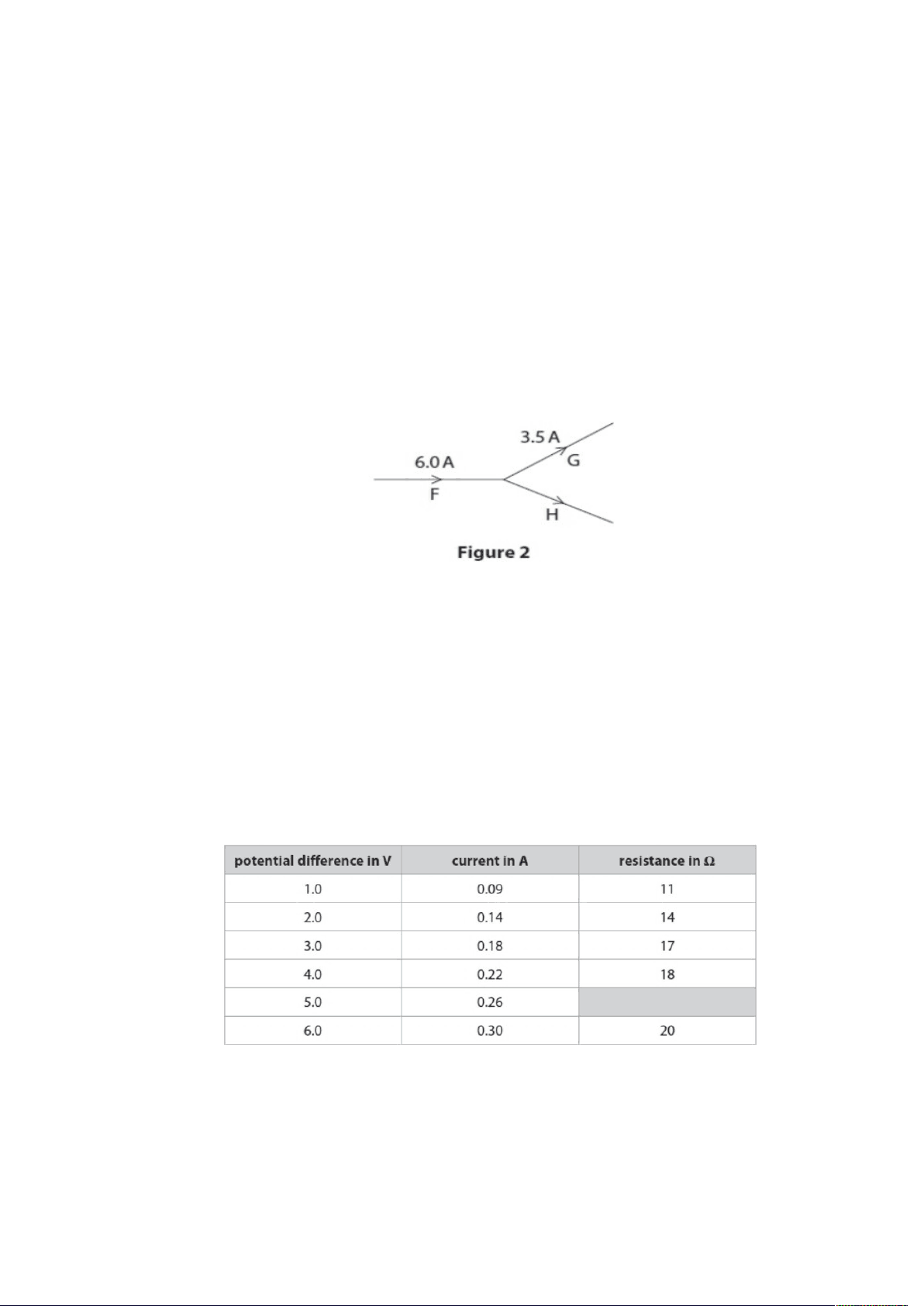
2. Figure 2 shows the junction of three wires, F, G and H, in a circuit.
The current in wire F is 6.0 A.
The current in wire G is 3.5 A.
Calculate the current in wire H.
..............................................................................................................................................................
.............................................................................................................................................................
.............................................................................................................................................................
............................................................................................................................................................
3. A student investigates how the current in a lamp changes with the potential difference across the lamp.
The student uses the results to calculate the resistance of the lamp. The results are shown in the table in
Figure 5.
One value of resistance is missing from the table in Figure 5.
Calculate the value of resistance that is missing from the table.
..............................................................................................................................................................
.............................................................................................................................................................
.............................................................................................................................................................
............................................................................................................................................................
pf3
pf4
pf5
pf8
pf9

Partial preview of the text

Download Secondary Science - Electricity and more Exercises Physics in PDF only on Docsity!

  1. A technician investigates the potential difference (voltage) across an electrical heater. The resistance of the heater is 15 Ω. The current in the heater is 0.56 A. Calculate the potential difference (voltage) across the heater. .............................................................................................................................................................. ............................................................................................................................................................. ............................................................................................................................................................. ............................................................................................................................................................
  2. Figure 2 shows the junction of three wires, F, G and H, in a circuit. The current in wire F is 6.0 A. The current in wire G is 3.5 A. Calculate the current in wire H. .............................................................................................................................................................. ............................................................................................................................................................. ............................................................................................................................................................. ............................................................................................................................................................
  3. A student investigates how the current in a lamp changes with the potential difference across the lamp. The student uses the results to calculate the resistance of the lamp. The results are shown in the table in Figure 5. One value of resistance is missing from the table in Figure 5. Calculate the value of resistance that is missing from the table. .............................................................................................................................................................. ............................................................................................................................................................. ............................................................................................................................................................. ............................................................................................................................................................

b) Use the values of the voltage and current at point P and at point Q on the graph in Figure 18 to complete the table in Figure 18. .............................................................................................................................................................. ............................................................................................................................................................. ............................................................................................................................................................. ............................................................................................................................................................ c) Calculate the resistance of the filament lamp when the voltage is 4.5 V and the current is 51 mA. .............................................................................................................................................................. ............................................................................................................................................................. ............................................................................................................................................................. ............................................................................................................................................................

  1. Figure 1 shows an electrical circuit. Draw a circuit diagram of the electrical circuit in Figure 1 in the space below.
  2. A resistor is connected to a power supply. The resistor becomes warm while there is a current in it. Explain why the resistor becomes warm. .................................................................................................................................................................. .................................................................................................................................................................. .................................................................................................................................................................. ..................................................................................................................................................................
  1. Which row in the table describes the way that ammeters and voltmeters should be connected with a component in a circuit?
  2. Figure 5 shows a charger for a car battery. The meter on the battery charger shows the current supplied to a battery. The meter on the battery charger is a) an ammeter b) an ohmmeter c) voltmeter d) a wattmeter
  3. Lydia is comparing series and parallel circuits in a class practical. Lydia switches on both circuits. i. Which one is the correct answer. a) The reading on A1 is less than the reading on A2. b) The total resistance in circuit B is 6 Ω. c) The potential difference across the 8 Ω is the same in both circuits. d) The potential difference across A2 is very large
  1. Tim also connects resistors in series and parallel. a. He sets up this series circuit. (i) Calculate the resistance of R1. (ii) What is the voltage across R2? b. He sets up this parallel circuit. (i) What is the voltage between points X and Y? (ii) All the resistors have the same resistance. What is the current through point Z?
  1. (a). Tim does an experiment using a circuit with three resistors in series. (i) Which resistor will have the largest potential difference across it?............................................... (ii) Which statement best explains this? Put a tick (✓) in the box next to the correct answer. (b). In another experiment, Tim is using 100 kΩ and 200 kΩ resistors. Which arrangement of resistors will have the smallest total resistance? Put a tick (✓) in the box next to the correct answer.
  2. Anna is investigating resistors. She connects a resistor to a battery, an ammeter and a voltmeter to measure the resistance of the resistor. a. Complete the circuit that she should use.