




1
PHYSICS 103: Lecture 18
•Archimedes Principle
•Example Problems
Agenda for Today:
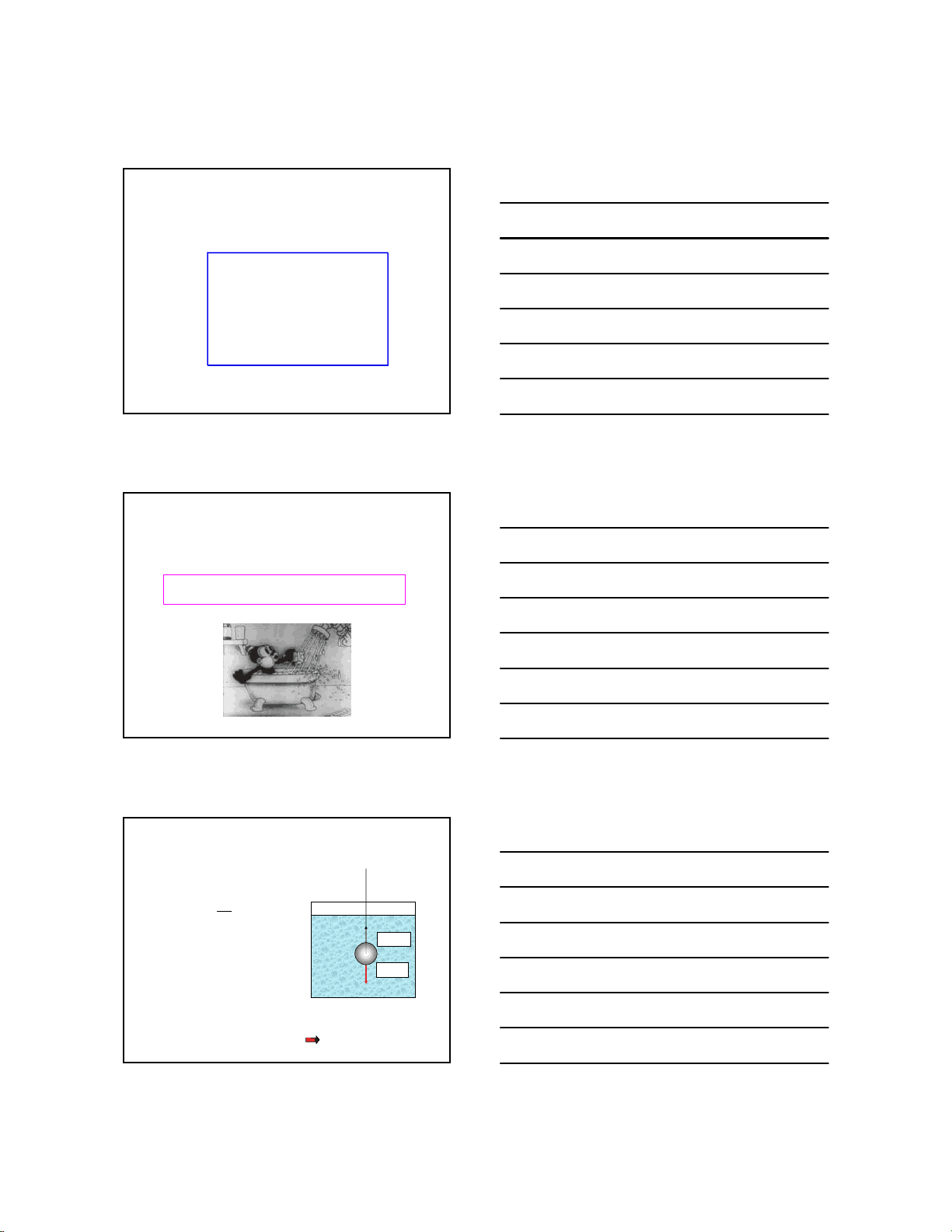
Archimedes Principle
An object imersed in a fluid experiences an upward
buyont force equal to the weight of fluid it displaces
Fg=mg
Fb=mfg
The density of anything is:
V
m
ρ=
This means that the mass can be written
as:
ρVm =
Since an object displaces the same volume of fluid, this means that if
an object is less dense than the fluid it is submerged in, the
buoyonacy force is greater than its weight
An Object in a Fluid:
The object will rise until it floats

