Download Exam Solutions for ECE 2030 Computer Engineering Fall 1999 - Problem 1 to 4 and more Exams Computer Science in PDF only on Docsity!
4 problems, 4 pages Exam Two Solutions 15 October 1999
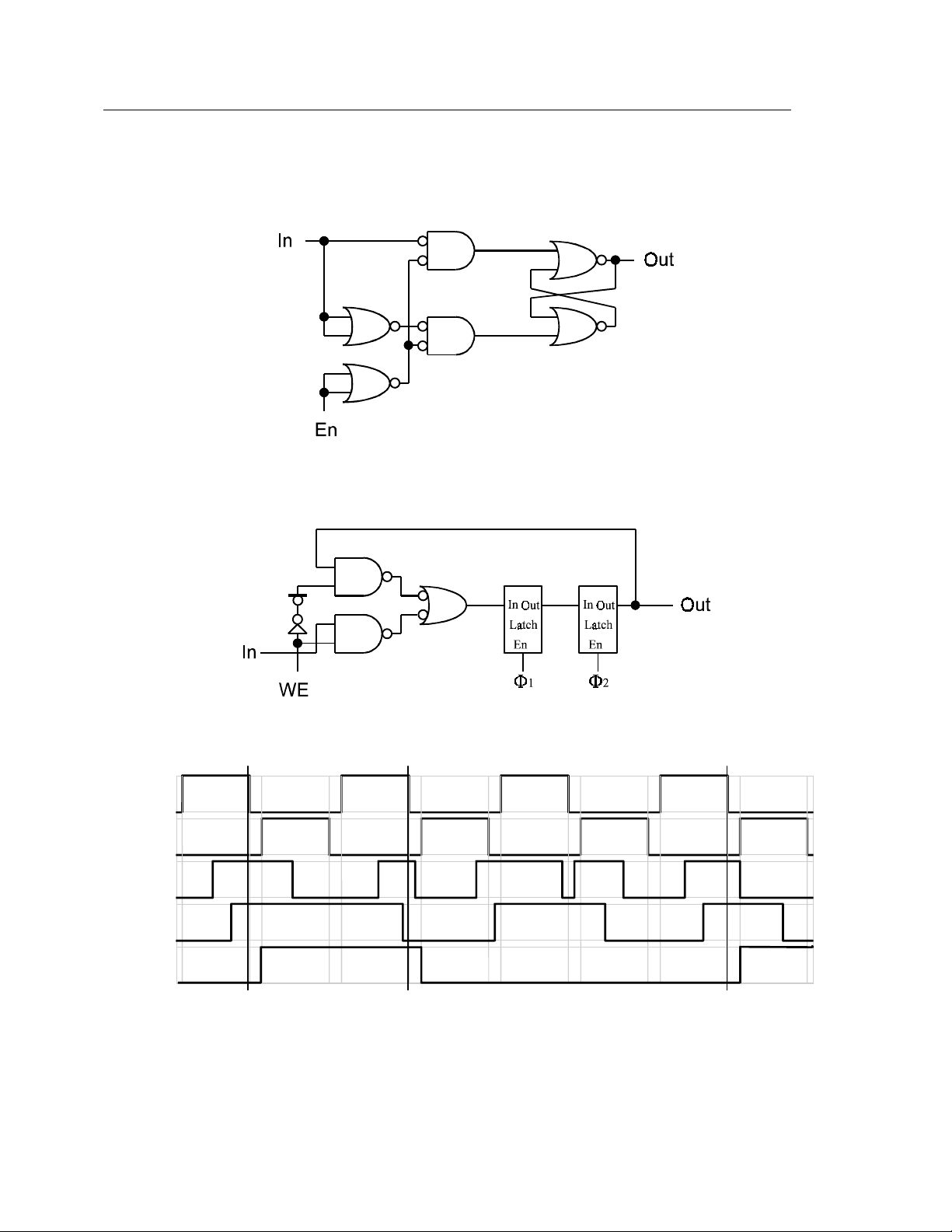
Problem 1 (3 parts, 28 points) Art of the State Part A (10 points) Implement a transparent latch using only six two-input NOR gates. Label the inputs In and En , and the output Out. No other gates should be used.
Part B (8 points) Implement register with write enable using transparent latches, NAND gates, and inverters. Use an icon for the transparent latches. Label the inputs In , WE, ΦΦΦΦ 1 , ΦΦΦΦ 2 and the output Out.
Part C (10 points) Assume the following signals are applied to your register. Draw the output signal Out. Draw a vertical line where In is sampled. Assume Out starts at zero.
Φ 1 Φ 2 WE In Out
4 problems, 4 pages Exam Two Solutions 15 October 1999
Problem 2 (3 parts, 28 points) Number Stuff Part A (8 points) Convert some binary values (and powers of two) into decimal notation: binary notation decimal notation 1100100 100 11011011 219 10101.101 21. 235 32 billion Part B (8 points) Convert the following hexadecimal values into octal notation: hexadecimal notation octal notation 101 401 FEED 177355 7734 73464 156.17 526. Part C (12 points) For each problem below, (a) compute the operations using the rules of addition, (b) indicate whether an error occurs assuming all numbers are expressed using a five bit two’s complement representation, and (c) indicate whether an error occurs assuming all numbers are expressed using a five bit unsigned representation.
addition
result 1 1 0 1 0^ 1 0 0 0 0^ 0 0 0 0 0^ 0 1 1 1 1
signed
error? yes^ no^ no^ yes
unsigned
error? no^ yes^ yes^ yes
4 problems, 4 pages Exam Two Solutions 15 October 1999 Problem 4 (2 parts, 20 points) Priority Fun Consider a 8 to 3 priority encoder with the following priority: (lowest priority) I 4 < I 6 < I 0 < I 1 < I 3 < I 2 < I 7 < I 5 (highest priority) Part A (10 points) Complete the following truth table with appropriate inputs and outputs for this priority scheme: I 7 I 6 I 5 I 4 I 3 I 2 I 1 I 0 O 2 O 1 O 0 Valid 0 0 0 0 0 0 0 0 X X X 0 0 X 0 X 0 0 0 1 0 0 0 1 0 X 0 X 0 0 1 X 0 0 1 1 0 X 0 X X 1 X X 0 1 0 1 0 X 0 X 1 0 X X 0 1 1 1 0 0 0 1 0 0 0 0 1 0 0 1 X X 1 X X X X X 1 0 1 1 0 1 0 X 0 0 0 0 1 1 0 1 1 X 0 X X X X X 1 1 1 1 Part B (10 points) Complete the truth table for the following unusual logic block
A B
Out
A B Out 0 0 1 0 0 1 1 1
1
1
0
0