Download CS 162, Midterm 2 Solutions - Spring 2000 and more Exams Operating Systems in PDF only on Docsity!
CS 162, Spring 2000 (April 10, 2000) SOLUTIONS
Midterm
Prof. Michael J. Franklin
General Information: This is a closed book examination. You have 1 hour and 20 minutes to answer as many questions as possible. Partial credit will be given. There are 100 points in all. You should read all of the questions before starting the exam, as some of the questions are substantially more time-consuming than others.
Write all of your answers directly on this paper. Be sure to clearly indicate your final answer for each question. Also, be sure to state any assumptions that you are making in your answers.
Please try to be as concise as possible.
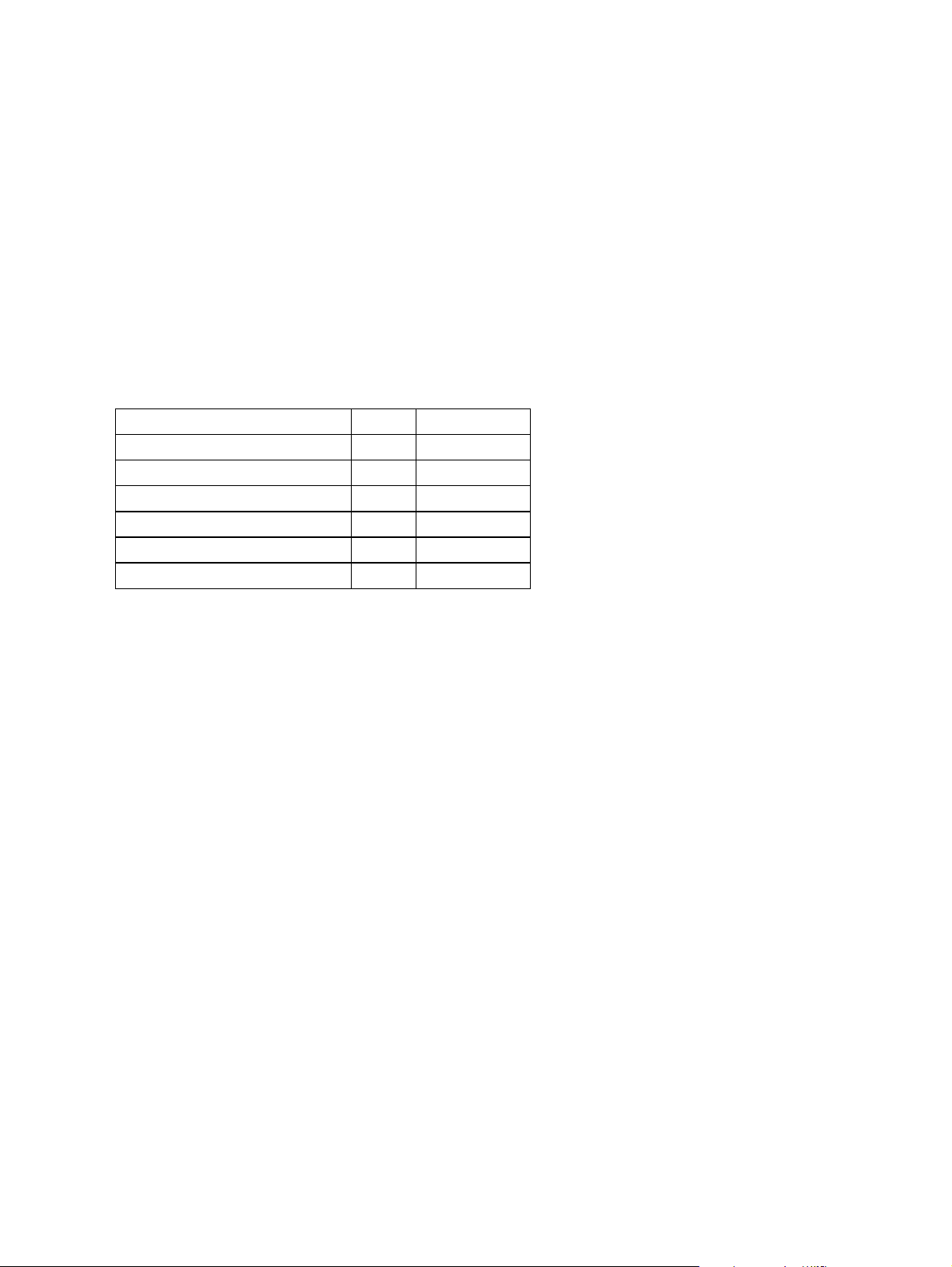
Problem Possible Score
- CPU Scheduling (5 parts) 20 20
- Demand Paging (6 parts) 30 30
- Caching (3 parts) 20 20
- Address Translation (3 parts) 20 20
- Disk Management (2 parts) 10 10 TOTAL 100 101 (can't add)
Problem #1 [5 parts, 20 points total]: CPU Scheduling
a) (4 points) Assume that 3 processes all with requirements of 1 second of CPU time each and no I/O arrive at the same time. What will be the average response time (i.e., average time to completion) for the processes under FIFO scheduling?
b) (4 points) Answer part "a" for Round Robin (RR) scheduling assuming a timeslice of 0.1 sec and no overhead for context switches (i.e., context switches are free).
c) (4 points) Answer part "a" for Shortest Job Finish (SJF) scheduling.
d) (4 points) Multilevel Feedback Queue Scheduling (MFQS) is a fairly good, general CPU scheduling algorithm, but as initially described in class, can lead to starvation under certain circumstances. Briefly describe how starvation can occur using MFQS and how to modify MFQS so that starvation can be avoided.
e) (4 points) What advantage is there in having different time-quantum (i.e. timeslice) sizes on different levels of the MFQS approach?
Problem #2 [6 parts, 30 points total]: Demand Paging
a) (3 points) Consider a demand paging system that use 4 KByte pages. In such a system, does a Least Recently Used (LRU) page replacement policy exploring temporal locality? If so, then how? If not, why not?
b) (3 points) Consider a demand paging system that use 4 KByte pages. In such a system, does a Least
CS 162, Spring 2000 (April 10, 2000) SOLUTIONS Midterm #2 Prof. Michael J. Franklin 1
Recently Used (LRU) page replacement policy exploit spatial locality? If so, then how? If not, why not?
c) (6 points) Consider a demand paging system with four physical memory frames and the following reference string over seven pages: 1, 2, 3, 4, 2, 1, 5, 6, 2, 1, 2, 3, 7, 6 Assuming that memory starts empty, how many page faults will occur and what will be the final contents of memory under the FIFO page replacement policy? Circle your answers.
d) (6 points) Answer the problem of part "c" for the LRU policy. Recall that the reference string is: 1, 2, 3, 4, 2, 1, 5, 6, 2, 1, 2, 3, 7, 6. Circle your answers.
e) (6 points) Answer the problem of part "c" for the MIN (i.e., optimal) policy. Recall that the reference string is: 1, 2, 3, 4, 2, 1, 5, 6, 2, 1, 2, 3, 7, 6. Circle your answers.
f) (6 points) Suppose that you want to use a paging algorithm that requires a reference bit (such as clock or working set) for each frame but the hardware for which you are implementing your operating system does not provide one. Briefly describe how you could simulate one and state (in general terms) what the main costs of your approach would be.
Problem #3 [3 parts, 20 points total]: Caching -- Hungry Aliens Revisited
(Use the following parameter values to answer the parts of this question. Clearly show your work in order to get partial credit.) PEarth Probability that the pasta can be found on Earth 0. PMoon Probability that the pasta can be found the Moon 0. PPluto Probability that the pasta can be found on Pluto 1. LEarth Time required to try Earth 10 minutes LMoon Time required to try 100 minutes LPluto Time required to try 2000 minutes
a) (6 points) Earth and Pluto -- Assume an alien has arrived on earth looking to eat his favorite type of Pasta (no need to worry about how many arms the alien has). He starts looking on Earth, if he can't find it there, he flies his space shit to Pluto where he knows they always have that kinda of pasta (in this case, if the pasta is not on Earth, it will take 2010 minutes for the Alien to get the pasta). On average, how long should it take for the Alien to find his pasta?
b) (6 points) Add the moon -- Now consider the case where the pasta may also be located on the moon (according to the probabilities and miss penalties shown above). In this case, how long should it take for the Alien to find his pasta (assuming he goes from Earth to the Moon, and then to Pluto if necessary)?
c) (8 points) For the problem in part "b" above, for what values (if any) of LMoon would it make sense for the Alien to skip searching the moon and go straight to Pluto?
Problem #4 [3 parts, 20 points total]: Address Translation
Problem #2 [6 parts, 30 points total]: Demand Paging 2
Problem #5 [2 parts, 10 points total]: Disk Management
a) (5 points) Compare the performance of the FAT structure used by MS-DOS (where file blocks are linked in an external structure) to that of the basic "linked allocation" techniqu (where file blocks are linked together via points in each block) in terms of sequential access and random access. Be sure to state any assumptions you are making in terms of what if anything is memory resident.
b) (5 points) The UNIX BSD 4.1 inode structure is intended to support both small files (e.g., several KBytes) and large files (e.g. up to some number of GBytes) efficiently. Briefly describe the mechanism employed to achieve this and state a potential problem of the approach for performance when accessing large files.
Posted by HKN (Electrical Engineering and Computer Science Honor Society)
University of California at Berkeley
If you have any questions about these online exams
Problem #5 [2 parts, 10 points total]: Disk Management 4