
Comparing Potential Energy and Kinetic Energy in Elliptical Orbits and Projectile Motion, Exams of Physics

Information on the comparison between potential energy (u) and kinetic energy (ke) in the context of elliptical orbits around the sun and projectile motion on an airless planet. Diagrams and answers for two problems: the first problem discusses the relationship between u and ke for a planet in elliptical orbit, while the second problem calculates the speed of a projectile fired from the surface of an airless planet at a certain distance. Useful for students studying physics, particularly those focusing on orbital mechanics and projectile motion.

Typology: Exams

Pre 2010

Uploaded on 02/10/2009

koofers-user-7na
koofers-user-7na 🇺🇸

8 documents

1 / 3

Toggle sidebar

This page cannot be seen from the preview

Don't miss anything!

bg1
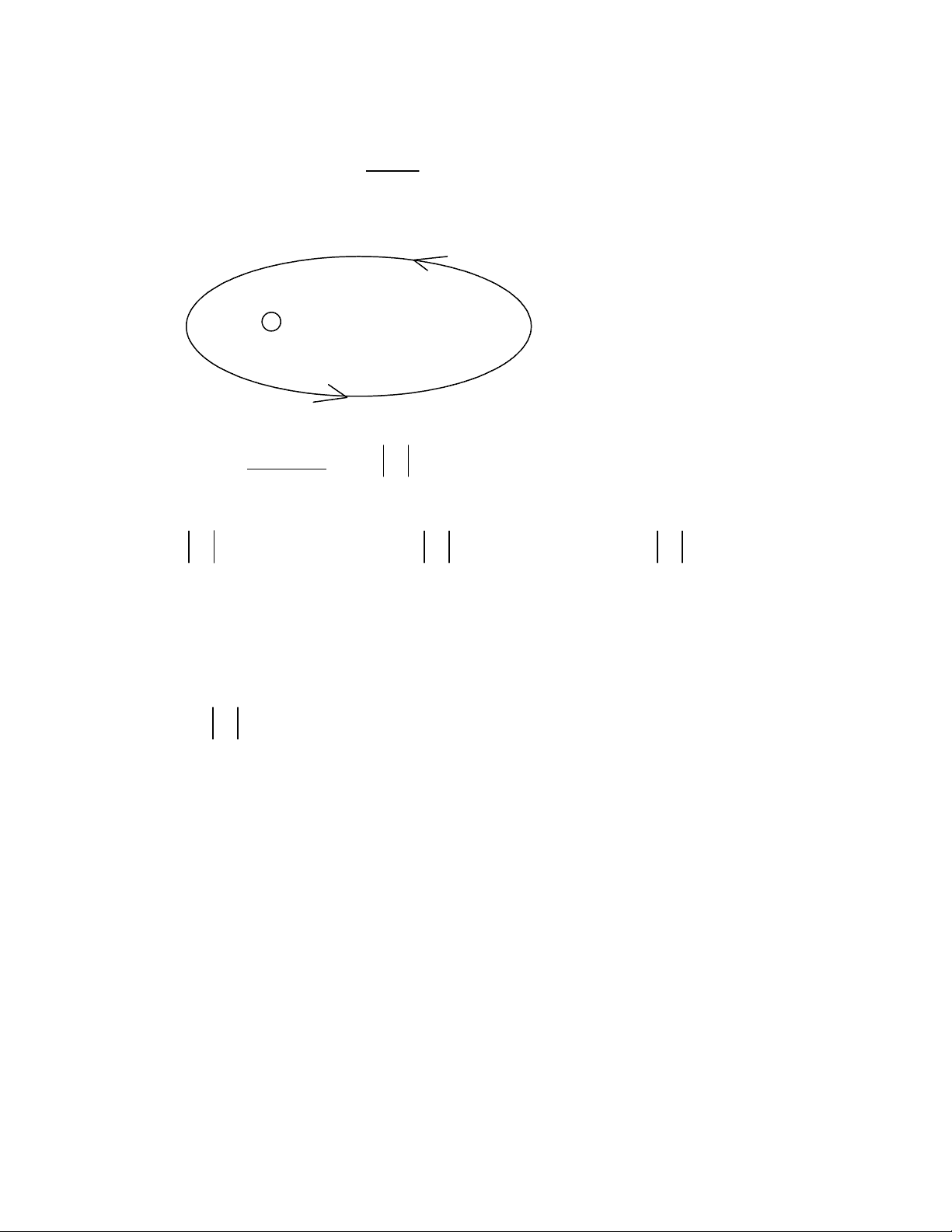
CT9-13.A planet is in elliptical orbit around the Sun. The zero of potential energy U is
chosen at r = , so
U r GMm
r
( ) 
.
How does the magnitude of U
U U
compare to the KE?
Pink:
U
> KE Green:
U
< KE Yellow:
U
=KE
Blue: depends on the position in the orbit.
Answer:
U
> KE. When v< vesc, the orbit is bound, as in the diagram, and the total
energy Etot is negative. [When v=vecs, Etot = 0. When v > vesc , Etot > 0.] Only if the
(+)KE is smaller than the magnitude of the (-)U, can we have Etot = KE + U < 0. A
diagram helps:
pf3

Partial preview of the text

Download Comparing Potential Energy and Kinetic Energy in Elliptical Orbits and Projectile Motion and more Exams Physics in PDF only on Docsity!

CT9-13. A planet is in elliptical orbit around the Sun. The zero of potential energy U is

chosen at r = , so U^ r^

GMm

r

How does the magnitude of U  U  U compare to the KE?

Pink: U > KE Green: U < KE Yellow: U =KE

Blue: depends on the position in the orbit.

Answer: U > KE. When v< vesc, the orbit is bound, as in the diagram, and the total

energy Etot is negative. [When v=vecs, Etot = 0. When v > vesc , Etot > 0.] Only if the (+)KE is smaller than the magnitude of the (-)U, can we have Etot = KE + U < 0. A diagram helps:

r

PE

Etot

PE

KE