Download Phonological Theory I: Cycles, Levels, and Rules in Linguistics and more Assignments German Philology in PDF only on Docsity!
Class 8: The cycle, part II
To do
- Finish Chamorro assignment (due Tuesday)
- Anderson ch. 10 study questions (due Tuesday or Thursday, if you prefer)
Overview: Evidence for distinctions among cycles.
1. Observation: two kinds of rules (sorry for leaving this out last time)
English “trisyllabic shortening” English tapping (a.k.a. flapping) [��]men [�]minous corro[d]e corro[�]ing s[��]ne s[�]nity mee[t] mee[�]ing ser[i]ne ser[�]nity i[d]yllic i[�]yll obsc[i]ne obsc[�]nity a[th]omic a[�]om div[ �]ne div[�]nity di[d] You di[�] it. prof[ �]nd prof[�]ndity wha[t] Wha[�] a day!
trisyllabic shortening tapping creates allophones not in phoneme inventory? obvious to untrained native speaker? sensitive to morphology? exceptions? applies across word boundaries?
2. Explaining these properties with lexical phonology
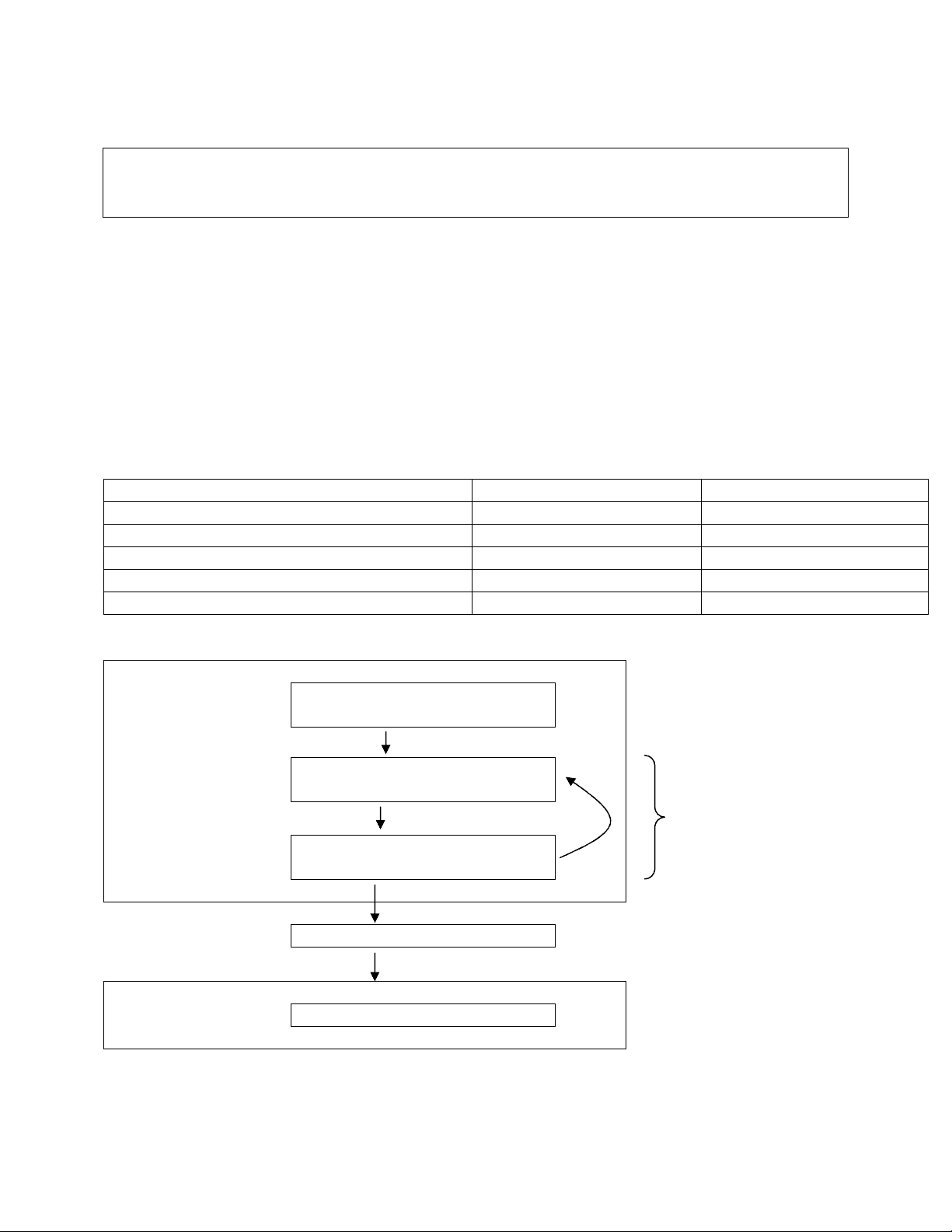
Lexicon Root—possibly with affix needed to give it a category
Apply “lexical rules” Result is a lexical entry
Attach affix, or apply other morphological rule, if any
Syntax bracket erasure
Postlexical phonology Apply “postlexical rules”
Each pass through these two boxes is a cycle
Morphological sensitivity Once a rule goes to the postlexical phonology, all morphological labels are removed (“bracket erasure”)—so flapping can’t see them.
“Structure preservation” Because the result of applying a lexical rule has to be a legitimate lexical entry, it can’t contain anything that doesn’t belong to the phoneme inventory.
Exceptions Lexical rules can “see” the lexical entry to check if it has any information about being an exception. Postlexical rules can’t, because they just get a string of segments.
Intuitions When making judgments about whether sounds are the same or different, speakers look at a lexical entry, not a surface form (that’s the theory here, anyway).
Word boundaries Because lexical rules apply within the lexicon (i.e., they output a new lexical entry, not a modified phrase or sentence), they can’t “see” other words in the environment—those other words aren’t there yet.
This model makes strong predictions about ordering: all postlexical rules must follow all lexical rules. o Is this interleaving of phonology and morphology different from the SPE idea of the cycle?
3. Observation: two classes of affix in English (and many other languages)
suffix examples -al, -ous, -th, -ate, -ity, -ic, -ify, - ion, -ive
-ship, -less, -ness, -er, -ly, -ful, - some, -y stress shift? párent vs. paréntal párent vs. párentless trisyllabic shortening? op[��]que vs. op[�]city op[��]que vs. op[��]quenessless velar softening? opa[k]e vs. opa[s]ity opa[k]e vs. opa[k]e-y prefix examples in-, con-, en- un-, non- can bear main stress? cóntemplate -- (rarely) obligatory assimilation of nasal? i l legal u n lawful both attach to bound morphemes? caust-ic -- (rarely) ordering non-in-com-prehens-ible^1 act-iv-at-ion-less-ness^2 semantics riot vs. riotous riot vs. rioter (prefixes that come in two flavors: re- , de -, sub -, pre -; and of course there are exceptions…)
(^1) “They are good movies, in a lot of ways - good production values, great cast, snappy dialogue, non-boring non-incomprehensible non-insane plotting - which lift them above your "Battlefield Earths" and so on.” (www.thepoorman.net/archives/002732.html) 2 “Future work on the temperature dependence of this ET step may allow verification of the correspondingly predicted near- activationlessness of the reaction.” (www.pnas.org/cgi/content/full/101/46/16198)
o What about these forms—what can we conclude about levels in Spanish?
����� +es ‘disdain (N, plural)’ �� ���+es ‘swains’
6. Kiparsky’s more recent proposal Keep the basic ideas of Lexical Phonology, but each level is a constraint ranking rather than a rule ordering. - Lexical levels are re-named Stem Level and Word Level (is there a Root Level before the Stem Level?) - The output of one level (or cycle within a level) is the input to the next—faithfulness constraints try to preserve changes made on the previous cycle. - The ranking can change from one level to the next. 7. Illustration: our Arabic case from last time— sorry for screwing it up in class; now corrected
[fihim+na] ‘we understood’ � fhímna [[fihim+Ø]+na] ‘he understood us’ � fihímna, not *fhímna [[fihim+at]+ak] ‘she understood you (m.)’ � fíhmatak, not *fhímatak
Stem Level for ‘he understood us’: place stress / f i h i m + Ø / GOODSTRESS *CC{C,#} MAX-Vstressed MAX-V * [i] IDENT (stress)
NOSTRESS
CLASH
�a f í h i m ** * b f i h í m *! ** * c f í h m *! * * * d f h í m *! * *
Word Level for ‘he understood us’: place another stress, preventing deletion / f í h i m + n a / GOODSTRESS *CC{C,#} MAX-Vstressed *[i] MAX-V IDENT (stress)
NOSTRESS
CLASH
a f í h i m n a *! ** �b f í h í m n a ** * * c f i h í m n a ** **! d f h í m n a *! * * * e f í h m n a *! * *
Postlexical level for ‘he understood us’: get rid of stress clash, but keep vowel / f í h í m n a / GOODSTRESS NOSTRESS CLASH
*CC{C,#} MAX-Vstressed IDENT (stress)
*[i] MAX-V
a f í h i m n a *! * ** b f í h í m n a *! ** �c f i h í m n a * ** d f h í m n a *! * *
This is not the only possible analysis!! (Also, GOODSTRESS conflates various constraints) Let’s check that it works for ‘we understood’ and ‘she understood you (m.)’
Stem Level for ‘we understood us’: place stress / f i h i m + n a / GOODSTRESS *CC{C,#} MAX-Vstressed MAX-V * [i] IDENT (stress)
NOSTRESS
CLASH
a f í h i m n a *! ** �b f i h í m n a ** c f í h m n a *! * * d f h í m n a * *
Word Level for ‘we understood’: delete unstressed /i/ / f i h í m n a / GOODSTRESS *CC{C,#} MAX-Vstressed *[i] MAX-V IDENT (stress)
NOSTRESS
CLASH
a f í h i m n a *! ** ** b f í h í m n a **! * * c f i h í m n a **! �d f h í m n a * * e f í h m n a *! * * * *
Postlexical level for ‘we understood’: no plausible rivals / f h í m n a / GOODSTRESS NOSTRESS CLASH
*CC{C,#} MAX-Vstressed IDENT (stress)
*[i] MAX-V
�a f h í m n a * b f h m n a *! * *
Stem Level for ‘she understood you (m.)’: place stress / f i h i m + a t / GOODSTRESS *CC{C,#} MAX-Vstressed MAX-V * [i] IDENT (stress)
NOSTRESS
CLASH
�a f í h i m a t ** * b f i h í m a t *! ** * c f í h m a t *! * * d f h í m a t *! * *
Word Level for ‘she understood you (m.)’: delete unstressed /i/ / f í h i m a t + a k / GOODSTRESS *CC{C,#} MAX-Vstressed *[i] MAX-V IDENT (stress)
NOSTRESS
CLASH
a f í h i m a t a k *! ** b f í h í m a t a k **! * * �c f í h m a t a k * * d f h í m a t a k *! * * *
Postlexical level for ‘she understood you (m.)’: no plausible rivals / f í h m a t a k / GOODSTRESS NOSTRESS CLASH
*CC{C,#} MAX-Vstressed IDENT (stress)
*[i] MAX-V
�a f í h m a t a k * b f h m á t a k *! * * *